 EN ROUTE TO THE CARIBBEAN · SINCE 1999
These adventures were not born from one person alone. Behind a joke, a voice, a room or a box arriving halfway around the world are paths that cross. Meet creators and collaborators, translators and performers, people who wrote about the games and those who still make it possible to play them.
Alphabetical index · 77 people
At the origins of adventure
The studio's foundations and its encounters with film and literature.
George LucasFounding and creative context
George Lucas founded the company whose research group gave rise to Lucasfilm Games. Its game-making developed through people and skills distinct from its film work, within an environment exploring new storytelling tools.
His place here concerns that context and documented interventions, including the suggestion associated with Rescue on Fractalus!'s aliens. It is distinct from creating Monkey Island, which belongs to Ron Gilbert and the adventure team.
Sources and personal accounts
Orson Scott CardWriting and dialogue
Writer Orson Scott Card's work also intersects with LucasArts adventures. Lucasfilm records his dialogue contribution to The Dig, where characterisation has to coexist with an exploration whose pauses, conversations and solutions are controlled by the player.
Writing contributions are distinct from designing an entire game. His connection with the first Monkey Island's insults also requires attention to the specific documented version, keeping the original release separate from later editions.
Sources and personal accounts
Peter LangstonEstablishing the first Lucasfilm Games team
Programmer and musician Peter Langston was asked to organise Lucasfilm's first video-game group. David Fox was among his early collaborators. Before SCUMM interfaces and pirate puzzles, the task was to discover experiences emerging from programming, pictures and sound.
His story introduces the studio's less frequently told experimental period before its famous adventures. Lucasfilm Games' name encompasses more than one genre or a single group of creators.
Sources and personal accounts
Steven SpielbergThe idea behind The Dig
Steven Spielberg brought Lucasfilm Games the story idea that became The Dig. Initially conceived for the screen, it found another way to explore an alien environment through games: players accompany discoveries and solve the journey's problems.
His contribution is distinct from that of the team that designed and produced the published adventure under Sean Clark. The connection to cinema matters, but The Dig is the result of a specifically interactive, collective production.
Sources and personal accounts
The people behind the games
Writing, images, music and tools: different skills come together to make an adventure.
Aric WilmunderSCUMM, programming and archives
Aric Wilmunder is a central figure in SCUMM's development and evolution. Adventure manuals repeatedly credit him alongside Ron Gilbert: their tools allowed different teams to create games with very different worlds, pacing and protagonists.
He also worked on conversions and adaptations, including The Secret of Monkey Island's CD-ROM edition. His personal archive gathers documents, notes and recollections that reveal how the games were made, connecting their technology with the preservation of their history.
Sources and personal accounts
Bill TillerBackgrounds, art direction and game design
Bill Tiller made a decisive contribution to The Curse of Monkey Island's landscapes. Harbours, vegetation, architecture and lighting turn pirate comedy into places that resemble an animated film and give the third game a distinctive visual identity.
His later career includes A Vampyre Story and Ghost Pirates of Vooju Island. The Lucas tradition continues through an illustrator who also led new projects. Backgrounds must accommodate characters, make action readable and inspire the player to discover the next screen.
Sources and personal accounts
Bret BarrettSCUMM programming and game design
Bret Barrett appears among Monkey Island 2's programmers alongside Tim Schafer, Tami Borowick and Dave Grossman. Scripters turn designs into events and interactions, giving rooms, puzzles and responses their playable character.
He continued at Humongous Entertainment, adapting adventure games for younger players. Credits and recollections preserve the memory of a colleague who died prematurely; his documented work also deserves attention in its own right.
Sources and personal accounts
Brian MoriartyWriting and game design
Brian Moriarty joined Lucasfilm Games after creating text adventures at Infocom. In Loom, music and action become one: sequences of notes change the world, replacing the inventory and verbs familiar from other adventures.
The manual presents the game as a fantasy by Moriarty and highlights collaboration with Mark Ferrari and other artists. Loom demonstrates that sharing a tool such as SCUMM does not require identical games: an interface can become part of a story's imagination.
Sources and personal accounts
Chuck JordanWriting, game design and scripting
Chuck Jordan's writing and adventure development have a particularly recognisable connection with The Curse of Monkey Island. Moving from page to scene means arranging jokes, optional replies, comic timing and interactions so the story still works when players take unexpected routes.
He later worked in Telltale's world, where episodes offered another way to structure and pace adventures. His career connects two periods of the Lucas tradition while keeping the studios, individual contributions and collaborative nature of the writing distinct.
Sources and personal accounts
Clint BajakianComposition, music production and sound
Clint Bajakian belongs to the musical team that gave LucasArts adventures a recognisable voice. Monkey Island 2's manual credits him with original music alongside Michael Z. Land and Peter McConnell. Day of the Tentacle also shows how composition can support a scene's comedy and personality.
His name recurs in Guybrush's adventures through Return to Monkey Island. Composition, production and sound work are related but distinct jobs: the series' musical identity comes from several collaborators and skills, rather than a single signature.
Sources and personal accounts
Collette MichaudAnimation, design and educational production
Collette Michaud worked on animation for Indiana Jones and the Fate of Atlantis and on design and animation for Sam & Max Hit the Road. In her account of those years she also recalls managing LucasArts' art department, combining creative and organisational responsibilities.
Her career continued through Lucas Learning and learning through play. Her later work on the Children's Museum of Sonoma County follows that connection: creating experiences in which curiosity and participation help people understand the world.
Sources and personal accounts
Darragh O’FarrellVoice direction and production
Darragh O'Farrell directed LucasArts voices as speech became essential to adventures. His name appears in Escape from Monkey Island's voice production, where the characters must remain recognisable across conversations, optional jokes and animated scenes.
Voice direction involves coordinating performers, recording sessions and narrative requirements. A convincing performance also depends on the context in which it is recorded and used. This responsibility is distinct from casting on other projects and from directing national localisations.
Sources and personal accounts
Dave GrossmanWriting and game design
Dave Grossman contributed writing and programming to the first Monkey Island games, helping create comedy through conversations and responses to the player's actions. He later co-led Day of the Tentacle with Tim Schafer, turning exchanges between time periods into the heart of its puzzles.
His career also spans Telltale's episodic storytelling and Return to Monkey Island, written and designed with Ron Gilbert. Player participation links these projects: the characters are funny, but progress also requires understanding their wishes, habits and contradictions.
Sources and personal accounts
David FoxGame design and programming
David Fox was among the early members of Lucasfilm Games, connecting its experimental beginnings to its adventure era. From Rescue on Fractalus! he moved to scripting Maniac Mansion and creating Zak McKracken and the Alien Mindbenders, with its mixture of science fiction, everyday life and absurdity.
His contributions continued through Thimbleweed Park and Return to Monkey Island, where he is credited as lead gameplay programmer. His career links the desire to create narrative worlds with the tools needed to make those worlds respond to the player.
Sources and personal accounts
Eric JohnstonProgramming and game technology
Eric Johnston helped bring Lucas adventures to more players through Macintosh versions. His professional SIGGRAPH biography documents ports of Loom, Monkey Island 1 and 2, and Indiana Jones and the Fate of Atlantis: preserving each adventure's interactions and personality in a different technical environment.
This work reaches beyond what appears on screen. Performance, tools and adaptations influence what creators can achieve. Porting a version, providing technical assistance and programming an adventure are distinct responsibilities, best understood through the credits of the specific release.
Sources and personal accounts
Gary WinnickArt, animation and game design
Gary Winnick belonged to Lucasfilm Games' early creative team and co-created Maniac Mansion with Ron Gilbert. His contribution joined adventure design to character appearance and animation: the mansion's inhabitants immediately convey distinctive personalities.
Credits on subsequent adventures, including Zak McKracken and Loom, reveal his continuing visual contribution. He later reunited with Gilbert for Thimbleweed Park, carrying a taste for strange settings, expressive figures and exploration across changing years and technologies.
Sources and personal accounts
Hal BarwoodWriting, game design and direction
Hal Barwood brought experience from film to LucasArts adventures. He is particularly associated with Indiana Jones and the Fate of Atlantis, designed with Noah Falstein: an original Indy journey with an interactive structure of its own, rather than a retelling of a film.
Its alternative paths make design choices tangible: teamwork, reasoning and action offer different ways through the story. His later work on Indiana Jones and the Infernal Machine continued his exploration of the archaeologist and the relationship between space, narrative and discovery.
Sources and personal accounts
Jake RodkinGame design, direction and community
Jake Rodkin's career crosses the boundary between fan communities and adventure production. Before and alongside his game work, his name was associated with Mixnmojo and critical discussion of the Lucas world.
At Telltale he contributed to adventures including Tales of Monkey Island and collaborated with Sean Vanaman. They later co-founded Campo Santo, the studio behind Firewatch. His story follows a legacy carried not only by company employees but also by people who observe, write, discuss and eventually make games.
Sources and personal accounts
Jared Emerson-JohnsonComposition and audio production
Jared Emerson-Johnson works across music, sound and voice production, including through Bay Area Sound. His career is closely associated with Telltale adventures, where music and sonic continuity help connect stories released as separate episodes.
His Monkey Island connection continued with Return. Its credits distinguish music implementation from composition by Michael Z. Land, Peter McConnell and Clint Bajakian. Making music work interactively inside a game is a creative and technical responsibility of its own.
Sources and personal accounts
Jonathan AckleyProgramming, writing and game design
Jonathan Ackley's path to Monkey Island runs through programming LucasArts adventures. His credits include Day of the Tentacle, Sam & Max Hit the Road, Full Throttle and The Dig, where scripts, animation and character behaviour had to become a working game.
He later co-led The Curse of Monkey Island with Larry Ahern. Guybrush's third voyage preserved the series' world and humour while developing a distinctive animated identity. His subsequent work on Disney attractions carried interactive storytelling beyond the computer, creating places where visitors participate in the story.
Sources and personal accounts
Julian KwasneskiSound and voice production
Julian Kwasneski's career connects the audio history of adventures with its continuation at Bay Area Sound. Sound design and voice production lend substance to environments and help characters retain their personalities across productions.
His professional partnership with Jared Emerson-Johnson extends across Telltale adventures, but their contributions should not be collapsed into one. A score, an effect and a recording session answer different needs; studio membership does not imply composing every piece it produces.
Sources and personal accounts
Khris BrownCasting and voice direction
Khris Brown's work concerns an increasingly visible part of adventures in the age of speech: choosing performers and helping them turn written dialogue into recognisable characters. Her career spans LucasArts voice production and many later projects.
Return to Monkey Island credits her with casting and English voice direction. This is distinct from translating dialogue or directing other language editions. Behind a voice that sounds effortless lie preparation, listening and coordination.
Sources and personal accounts
Larry AhernAnimation, art direction and game design
Larry Ahern helped shape several of LucasArts' most recognisable visual worlds. He animated Monkey Island 2 and contributed to the characters of Day of the Tentacle and Full Throttle: the former's comic distortions and the latter's rougher energy reveal his range.
With Jonathan Ackley, he directed and designed The Curse of Monkey Island. His work linked character drawing to storytelling and the rules of the adventure, helping the third game establish its own visual language and rhythm.
Sources and personal accounts
Lee PettyArt direction and game design
Lee Petty belongs to Double Fine's story rather than the classic LucasArts team. His inclusion follows the adventure legacy beyond Lucas: creators continue exploring unusual characters, worlds and interactive stories while seeking new forms.
His work includes art direction and projects such as Stacking and Headlander, which closely connect visual style and mechanics. This is a related branch of the creative tradition, not a development credit on the original Monkey Island games.
Sources and personal accounts
Mark DarinWriting and narrative design
Mark Darin came to the series through Telltale Games, following independent work at Pinhead Games and on detective Nick Bounty. His portfolio connects storytelling, mechanics and player participation: an adventure needs reasons to act as well as a story to hear.
He contributed design and writing to Tales of Monkey Island, with specific credits on its second and fifth episodes. He represents the Lucas legacy at another studio, rather than membership of the original LucasArts team, and the transition from boxed adventures to episodic storytelling.
Sources and personal accounts
Mark FerrariIllustration and digital art
Mark Ferrari shaped early Lucasfilm adventures when a small palette had to suggest entire nights, depths and atmospheres. Manuals credit him with backgrounds for Zak McKracken and The Secret of Monkey Island; his illustrations also form a central part of Loom's identity.
These games reveal digital painting within precise constraints. Colour separates planes, guides the eye and changes a story's mood. His later participation in Thimbleweed Park reconnects that work with the tradition of two-dimensional adventures.
Sources and personal accounts
Michael Z. LandComposition and music systems
Monkey Island's main theme is one of Michael Z. Land's most familiar signatures, but his contribution goes beyond a melody. With Peter McConnell he developed iMUSE, allowing music to respond to events without losing continuity: a meeting of composition and game behaviour.
Credited on Monkey Island 2 and subsequent adventures, Land also created distinctive sound worlds such as The Dig's. The name Michael Z. Land follows the original credits. Composition, sound work and implementation remain separate responsibilities within these collaborations.
Sources and personal accounts
Mike StemmleWriting, game design and direction
Mike Stemmle, also credited as Michael Stemmle, helped shape LucasArts adventure design and humour. His work includes Sam & Max Hit the Road and co-leading Escape from Monkey Island with Sean Clark as Guybrush entered three-dimensional environments.
He later contributed to Tales of Monkey Island at Telltale. His career spans different studios and tools: returning to familiar characters means preserving their personalities while adapting puzzles, pacing and conversation to a new game.
Sources and personal accounts
Noah FalsteinGame design and programming
Noah Falstein belongs to the first generation of Lucasfilm Games designers. His work includes Indiana Jones and the Last Crusade and collaboration with Hal Barwood on Fate of Atlantis: two ways of turning a film archaeologist into a character whose actions require thought and choice.
His involvement in SCUMM's history and accounts of the early team reveal a collaborative culture in which ideas moved between projects. His contribution concerns not just individual titles but the organisation of goals, puzzles and consequences within a story.
Sources and personal accounts
Peter ChanBackgrounds, concept art and art direction
Peter Chan helped make LucasArts locations much more than scenery. Credited for Monkey Island 2's backgrounds, he also contributed to the worlds of Day of the Tentacle, Sam & Max Hit the Road, Full Throttle and Grim Fandango, each with a different identity.
Sketch collections in the remastered editions reveal the work before the finished image: shapes, colours and viewpoints that establish atmosphere and guide action. An adventure room is a visual composition that invites exploration while preserving a readable sense of space.
Sources and personal accounts
Peter McConnellComposition and interactive music
Peter McConnell's music gives places a character before the player has finished exploring them. Monkey Island 2's manual credits him for composition with Michael Z. Land and Clint Bajakian, and for developing iMUSE with Land.
His work includes Day of the Tentacle and Grim Fandango, supporting very different fictional worlds through musical language and atmosphere. Reissues and live performances let audiences enjoy the scores separately; inside the games, their relationship with actions, dialogue and scene transitions remains essential.
Sources and personal accounts
Rex CrowleArt direction
Rex Crowle came to Return to Monkey Island after work including Tearaway and Knights and Bikes. He had encountered the series as a player. Lucasfilm recounts how a Guybrush illustration he sent Ron Gilbert years earlier helped bring his style to mind for the new project.
As Return's art director he sought a contemporary visual language for familiar characters. He belongs to the series' later creative continuity rather than 1990s LucasArts, recognising the original world's heart while giving it room to change form.
Sources and personal accounts
Ron GilbertCreation, game design, writing and tools
Ron Gilbert created Monkey Island and co-created Maniac Mansion with Gary Winnick. Alongside these stories came work on SCUMM, the system that made scenes, characters and events easier to organise and became a shared foundation for many LucasArts adventures.
The first two Monkey Island games established a pirate world where exploration, conversation and comedy matter as much as puzzles. His career continued through Humongous Entertainment and other projects before returning with Dave Grossman for Return to Monkey Island. That return sits alongside the contributions of those who continued the series in between.
Sources and personal accounts
Sean ClarkProgramming, game design and direction
Sean Clark worked on both the code and design of LucasArts adventures. The CD-ROM edition of The Secret of Monkey Island credits him with scripting. He later led The Dig, a science-fiction exploration adventure based on an idea by Steven Spielberg.
With Mike Stemmle he led Escape from Monkey Island, as the series moved into three-dimensional environments and a different style of interaction. The two projects show contrasting sides of his work: a serious alien world and Guybrush's pirate comedy in a new technical form.
Sources and personal accounts
Sean VanamanWriting and narrative design
Sean Vanaman joined the Monkey Island tradition through Telltale, contributing to Tales' writing and design. Its episodic structure required recognisable objectives and characters in each chapter while maintaining a story across the season.
His collaboration with Jake Rodkin continued through The Walking Dead and the founding of Campo Santo, creators of Firewatch. His individual career follows the development of interactive storytelling in which conversations, decisions and relationships carry increasing weight.
Sources and personal accounts
Steve PurcellComics, illustration, animation and game design
Steve Purcell created Sam & Max and contributed to LucasArts' worlds as an illustrator, animator and writer. His covers and work on Monkey Island backgrounds gave many players their first glimpse of Guybrush's world before they even started the game.
Sam & Max Hit the Road turned his comic universe into an adventure built around a duo with an established rhythm, dialogue and taste for the grotesque. His characters cross the boundaries between games, printed pages and animation.
Sources and personal accounts
Tami BorowickWriting, programming and game design
Tami Borowick offers a view of Monkey Island 2 through its scenes, dialogue and code. The manual credits her among its programmers; in an interview she also recalls learning SCUMM, working on the Monkey Island demo and adapting the second game for Amiga.
At Humongous Entertainment she went on to design children's adventures, including Freddi Fish. Her interest in characters who engage the player connects these projects and broadens the picture of a team often remembered chiefly through its best-known leaders.
Sources and personal accounts
Tim SchaferWriting, game design and direction
Tim Schafer contributed writing and programming to the early Monkey Island games and co-led Day of the Tentacle with Dave Grossman. He took sole project leadership on Full Throttle, then created Grim Fandango's combination of noir storytelling and Mexican imagery surrounding death.
Founding Double Fine opened another chapter, encompassing new works and the recovery of classics through remastered editions. His voice remains recognisable across changing settings and tones, bringing comedy together with melancholy characters, stubborn desires and worlds shaped by their contradictions.
Sources and personal accounts
Bringing a game to its players
Production, coordination, marketing and new editions.
Craig DerrickProduction and the series' revival
Craig Derrick connects several Monkey Island revivals: the Special Editions, Tales and Lucasfilm Games' collaboration on Return. Lucasfilm documents his work and his personal attachment to a series he discovered as a player, including the impact of Steve Purcell's illustrations.
His career follows the work of making new productions possible without being their sole author. A reissue, a chapter developed by another studio and a new Ron Gilbert adventure involve different agreements and responsibilities within the same publishing history.
Sources and personal accounts
Federico CrociA witness to game distribution in Bologna
Federico Croci worked at Simulmondo and, in his 2015 interview, recalled its relationship with C.T.O. for distribution in Italy and abroad. His account connects an Italian developer’s growth with the distributor that also brought Lucas games to market.
He describes translated manuals and recording sessions that could involve people who happened to be visiting. He appears here as a witness to Bologna’s connected games scene: his recollection does not establish a specific Lucas voice role or character.
Sources and personal accounts
Jenn SandercockProduction and development organisation
Jenn Sandercock worked on Return to Monkey Island's production and previously on several aspects of Thimbleweed Park. Her portfolio distinguishes design, programming and production, experience that helps connect departments and turn ideas into a game that can be completed.
Her GDC presentation on Return discusses a distributed team, planning and iteration. Alongside writers and images, a new adventure needs processes that let people work together while keeping the player's experience in view.
Sources and personal accounts
Lisa StarInternational coordination
Monkey Island 2's manual credits Lisa Star as International Coordinator. It is a concrete record of the organisation supporting adventures beyond their original market and connecting production with the needs of different editions.
Her credit highlights a job that often remains behind the scenes. Translations, packaging, schedules and international contacts belong to the broader route towards an audience; the exact duties of an individual role require documentary evidence.
Sources and personal accounts
Lucy BradshawProduction and development
Lucy Bradshaw is credited alongside Brenna Krupa-Holden for production on The Secret of Monkey Island's CD-ROM edition. Monkey Island 2's manual also lists her among Lucasfilm Games' development management. These are distinct responsibilities in their respective editions.
Her contribution illustrates the transition from a creative project to coordinated production. New media and versions involve more than packaging: teams, decisions and checks help bring an adventure to different audiences and machines.
Sources and personal accounts
Marco MadrigaliC.T.O. and adventures on Italian shelves
Marco Madrigali founded C.T.O., a name many Italian players encountered on game boxes. In Leader founder John Holder’s account, the transfer of the LucasArts catalogue to C.T.O. appears as a chapter in Italian game distribution.
His place in this collection concerns business and the commercial circulation of games. Agreements, catalogues and organization stand between an American studio and an Italian shop: that journey also helps an adventure find its audience.
Sources and personal accounts
Mary BihrMarketing and publishing
The Secret of Monkey Island's CD-ROM credits name Mary Bihr in product marketing. This work concerns presenting a game, supporting its release and connecting what its creators have made with an audience yet to discover it.
Roles need to be understood through individual editions and distribution documents. A marketing credit alone does not establish a particular increase in sales, but it records work between the creation of an adventure and its arrival in players' hands.
Sources and personal accounts
Shelley DayProduction and children's adventures
Monkey Island 2's original manual credits Shelley Day as producer. Production connects people, schedules and resources so a creative vision can become a playable work and reach its audience.
She subsequently co-founded Humongous Entertainment with Ron Gilbert, developing adventures around characters and challenges for children. Humongous was a separate company from LucasArts; the link lies in people's experience and their commitment to exploration, understanding and curiosity.
Sources and personal accounts
Adventures speak many languages
Translating jokes, references and clues for different audiences.
Boris Schneider-JohneOriginal German Monkey Island translations
Boris Schneider-Johne translated the original German editions of The Secret of Monkey Island and Monkey Island 2. Language is part of the action in these games: a joke must entertain, but may also provide guidance or the key to a puzzle.
His FAQ sets clear limits on the credit: he did not translate Return or games three to five, and the Special Editions also received new translations. His contribution belongs to a particular period of the series' German-speaking history.
Sources and personal accounts
Carlo De RensisReturn's Italian translation
Carlo De Rensis translated Return to Monkey Island into Italian with Cristiano Caliendo. Their audience often remembers names, phrases and jokes from earlier editions: continuity matters, but a new text also needs new solutions.
His colleague's interview recalls their collaboration during localisation. The Italian version should not be attributed to one translator alone, and text translation remains distinct from producing recorded voices, with separate credits and responsibilities.
Sources and personal accounts
Christophe PallarèsReturn's French translation
Christophe Pallarès worked on Return to Monkey Island's French edition. In an account shared by David Fox, he recalls joining a project initially kept secret and the excitement of returning professionally to a world he had known as a player.
His contribution helps construct the game's voice in another language. Series references and wordplay require research and decisions that fit the scene; exchanges with Concha Fernández Álvarez and fellow translators reveal the collective nature of localisation.
Sources and personal accounts
Concha Fernández ÁlvarezLocalisation and Spanish translation
Concha Fernández Álvarez worked on Return to Monkey Island's Spanish translation and localisation coordination. Her professional record and colleagues' accounts reveal the need to connect multiple languages, game updates and references to previous chapters.
Her contribution makes the shared work behind an international series visible. Humour crosses languages through people discussing intention, context and possible solutions, linking an individual translation with the organisation supporting all editions.
Sources and personal accounts
Cristiano CaliendoItalian translation and adventure commentary
Cristiano Caliendo co-translated Return to Monkey Island into Italian with Carlo De Rensis. His account describes intensive discussion of characters, references and the meaning of jokes, distinguishing a player's enthusiasm from localisation requirements.
Through Calavera Cafè he also discusses graphic adventures in analyses and conversations. These activities intersect but remain distinct: translating contributes to a game's edition, while commentary helps audiences interpret and discuss it after release.
Sources and personal accounts
Gabriele VegettiLocalization at C.T.O.
Gabriele Vegetti worked in the localization department at C.T.O., the Bologna distributor associated with Italian editions of LucasArts adventures. His accounts describe the links between translation, voice casting and the developer’s approval of auditions.
His experience reveals the work between a foreign-language script and the game that reaches players’ homes. Text, guidance for performers and technical problems belong to the same process: familiar voices also grow from this collaboration behind the scenes.
Sources and personal accounts
Makoto ShimoJapanese translation
Makoto Shimo translates from English into Japanese and lists Return to Monkey Island's text in his portfolio. His work helps bring an adventure built around particular uses of English to readers with different linguistic reference points.
This is a specific localisation credit, not a claim about earlier Japanese editions or voice acting. For a series built on conversations and interpreting clues, reading the dialogue in one's own language is a tangible part of encountering the game.
Sources and personal accounts
Marcel WeyersReturn's German translation
Marcel Weyers translated Return to Monkey Island into German. His personal account describes working for a community with memories of earlier editions: the new game needs its own voice while recognising characters and references players have known for years.
His testimony reveals research, experimentation and collaboration with the localisation team. Translating is not automatic word substitution: references and double meanings need solutions that work within the scene and the target language.
Sources and personal accounts
Rômulo WehlingBrazilian Portuguese translation
Rômulo Wehling is credited for Return to Monkey Island's Brazilian Portuguese translation. It extends the series' linguistic reach beyond its early European editions, allowing another audience to encounter the new chapter's characters, clues and humour directly.
Fellow localisation team members also acknowledge his work. This documented text translation is distinct from recorded voice production and should not be extended into claims about every earlier Brazilian edition or the entire national market.
Sources and personal accounts
Giving the characters a voice
Performances that become familiar from one language to another.
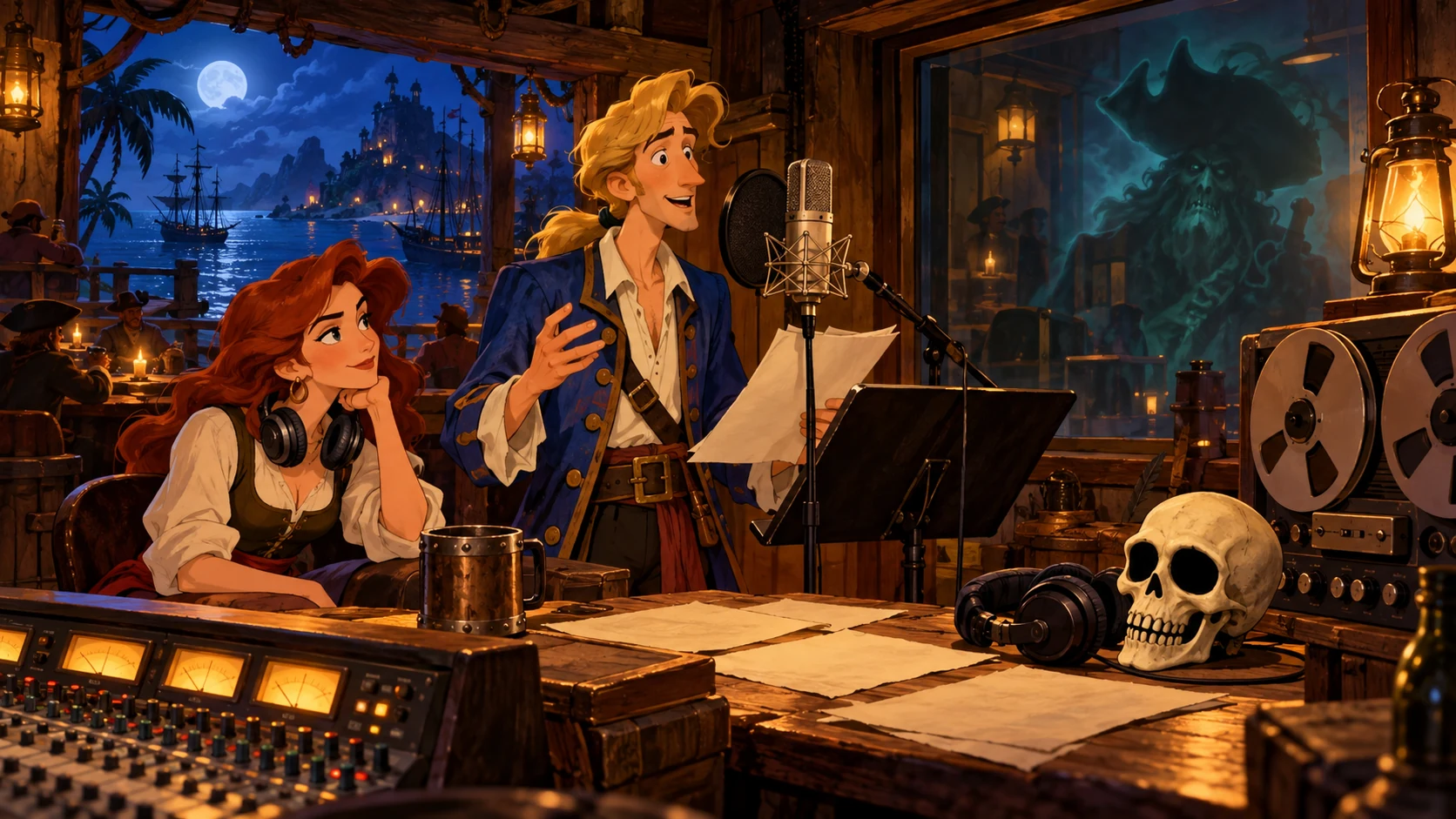
Alessandro ZucchelliStudio Florian, behind the microphone
Alessandro Zucchelli is associated with Bologna’s Florian Cinetivù studio, which worked with C.T.O. on localization recordings. Accounts from its collaborators describe a setting where performers and Italian adaptation met, from auditions to recording dialogue.
Alongside the actors, his profile recalls the place and technical work that made their voices possible. The history of Italian editions also passes through a recording room, where listening, direction and cooperation turn written dialogue into recognizable characters.
Sources and personal accounts
Alexandra BoydElaine's English voice
Alexandra Boyd is an actor, director and writer whose work includes Elaine Marley's English voice. Her portfolio recalls a longstanding Monkey Island connection across productions separated by time and visual style.
Her performance helps shape Elaine, but she does not appear in every chapter. Escape from Monkey Island features Charity James in the role. Following the individual casts preserves a familiar association without turning it into a universal credit.
Sources and personal accounts
Antonio Fernández MuñozGuybrush in Spanish editions
Antonio Fernández Muñoz played Guybrush in the Spanish versions of The Curse of Monkey Island and Escape from Monkey Island. A comic protagonist needs a voice that supports central conversations and the many optional responses encountered during exploration.
These two productions define the contribution described here. Their credits should not be automatically extended to Return, other languages or the originally unvoiced editions.
Sources and personal accounts
Dominic ArmatoGuybrush's English voice
Dominic Armato has voiced Guybrush Threepwood in English-language spoken productions since The Curse of Monkey Island. His performance connects games made by different teams: hesitation, enthusiasm and misplaced confidence must still sound like the same aspiring pirate.
Interviews and fan appearances also reveal his personal attachment to the series. His credit on the first two games belongs to the voiced Special Editions, not their original, unvoiced 1990s releases.
Sources and personal accounts
Giuseppe CalvettiGuybrush in the Italian Curse
Giuseppe Calvetti, also known as Beppe Calvetti, played Guybrush in The Curse of Monkey Island's Italian edition. For many players this was their first encounter with the pirate's voice, making the timing and delivery of dialogue part of their memories.
His credit concerns that performance, not an imaginary original dub of the first two games. A different actor played Guybrush in the next chapter; the change between productions should not invite invented personal explanations or rivalries.
Sources and personal accounts
Massimo Antonio RossiGuybrush in the Italian Escape
Massimo Antonio Rossi played Guybrush in Escape from Monkey Island's Italian edition. Our site preserves an interview offering a closer look at his work and the testimony of a performer who entered players' memories through the character.
His contribution follows Giuseppe Calvetti's performance in The Curse. This profile links to the existing interview and keeps acting distinct from translation, voice direction and wider production decisions.
Sources and personal accounts
Norman MattGuybrush in German editions
Norman Matt voices Guybrush in several German-language editions. Returning across successive productions provides sonic continuity for a protagonist whose appearance, development studio and style of adventure change.
The releases need to be distinguished: Tales' German voice localisation belongs to its later edition, rather than the original English episodic debut. Acting and text translation are separate credits to follow for each game.
Sources and personal accounts
Paolo DomingoGuybrush's French voice
Paolo Domingo is an actor and singer whose roles include Guybrush in French-language Monkey Island productions. The biography accompanying his public appearances places this role alongside his work in film, animation and musical theatre.
His performance shows how one protagonist acquires familiar vocal identities for different audiences. The role is documented, but individual edition credits still matter: recognising a voice does not place it in every chapter.
Sources and personal accounts
Renato CecchettoThe Italian voice of Manny Calavera
Renato Cecchetto played Manny Calavera in the Italian edition of Grim Fandango. His voice accompanies the travel agent’s journey through the afterlife, becoming part of Italian players’ memories of an adventure driven by dialogue and personality.
In his account of recording, he stresses the interpretive nature of the work and recalls players’ affection many years later. His testimony connects acting with an audience that often knows the character before discovering the person behind the voice.
Sources and personal accounts
Keeping curiosity alive
Websites, books, comics and interviews: the series continues beyond its games.
Andrea ContatoResearch into LucasArts history
Andrea Contato traces Lucasfilm Games and LucasArts in Ribelli, Pirati e Tentacoli. His account of the project discusses gathering testimony and material to follow the studio's beginnings, its people and the works that established its reputation.
This contribution belongs to video-game history and publishing. Following people, documents and production choices also reconstructs what is absent from the screen: preparation, movement between projects and the conditions in which a creative team develops its identity.
Sources and personal accounts
Daniel AlbuTech Talk and creators' recollections
Through Tech Talk, Daniel Albu records long conversations with programmers, artists, composers, actors and production staff. Its catalogue includes many figures from Lucas history, illuminating technical and organisational aspects of development.
His contribution as interviewer and developer preserves voices and experiences. These personal recollections offer valuable sources to consider alongside credits, documents and the versions that were actually released.
Sources and personal accounts
External interviews may contain spoilers.
Domenico «Diduz» MisciagnaLucasdelirium, criticism and research
Domenico Misciagna, known as Diduz, runs Lucasdelirium, an Italian archive devoted to Lucas games, creators and their legacy. Reviews, preserved news and in-depth articles follow the works over time, connecting personal memory with critical interpretation.
His original interviews, including one with Tami Borowick, also highlight less frequently discussed contributors. His role belongs to community research and commentary, a history connected with the games but distinct from producing them.
Sources and personal accounts
Ken «Dalixam» ChristensenThe World of Monkey Island
Ken Christensen, known as Dalixam, is the webmaster of The World of Monkey Island. In its historical forum he described a site devoted to news, curiosities, material and fan creations, including Paco Vink's comic based on the first game.
His name also appears in the preservation of that legacy when the comic became available again with the agreement of those involved. This is community publishing and preservation, distinct from official LucasArts game releases.
Sources and personal accounts
Laura «Cressup» CressInterviews and adventure coverage
Laura Cress, known online as Cressup, covers adventures through interviews, videos and articles. Conversations with Ron Gilbert and other creators bring audiences closer to the decisions, memories and challenges involved in making games.
Her work connects creators with an international community. Interviews about released works may discuss plots and endings: links should indicate spoilers so curiosity about production does not undermine a first playthrough.
Sources and personal accounts
External interviews may contain spoilers.
Nicolas DeneschauBook research on Monkey Island
Nicolas Deneschau wrote Les mystères de Monkey Island, published by Third Éditions. The book brings together interpretation, context and research into a world many players first know through their own memories.
His contribution extends the series' cultural circulation beyond games: books, translations and readers provide another route to the islands. It is critical publishing rather than a development credit or an official narrative continuation.
Sources and personal accounts
Paco VinkFan comics and illustration
Paco Vink created a comic adaptation of The Secret of Monkey Island and contributed graphics to The World of Monkey Island. His interpretation retells Guybrush's journey in a medium where sequences of images replace the player's decisions.
A later republication, made possible with his involvement and the original webmaster's agreement, introduced it to new readers. It is a creative community contribution, not an official LucasArts product or a complete official rewriting of the series.
Sources and personal accounts
Remi A. OlsenThe SCUMM Bar and The Adventurer
Remi A. Olsen is associated with the long history of The SCUMM Bar and The Adventurer newsletter. His editorial work spans news, archives, commentary and material about Monkey Island and adventures, connecting original players with later arrivals.
His account of the site's thirtieth anniversary reflects on communities, technology and changing ways of discussing games. This documented work forms part of a wider history involving several editorial teams and contributors.
Sources and personal accounts
SkyfoxThe SCUMM Bar's beginnings
Skyfox is the public name associated with founding and first running The SCUMM Bar. Updates and a farewell message recall a period when websites, IRC channels and direct exchanges with creators brought Monkey Island fans together.
In 2002 he announced the handover to Remi. Frequent updates, chat encounters and readers' contributions turned pages into a shared place, accompanying the series even through years without new chapters.
Sources and personal accounts
Making the next journey possible
Tools and research to keep adventures playable and open to study over time.
Aaron GilesDREAMM and access to original games
Aaron Giles created DREAMM, an environment for running original LucasArts games. Its documentation explains the emulated programs and platforms: a different approach from new engine implementations, also intended to make older works playable.
DREAMM concerns technical continuity rather than free distribution of the games. Players need the appropriate game data and supported editions; the tool itself does not grant a licence to the content.
Sources and personal accounts
Eugene SandulenkoScummVM, development and preservation
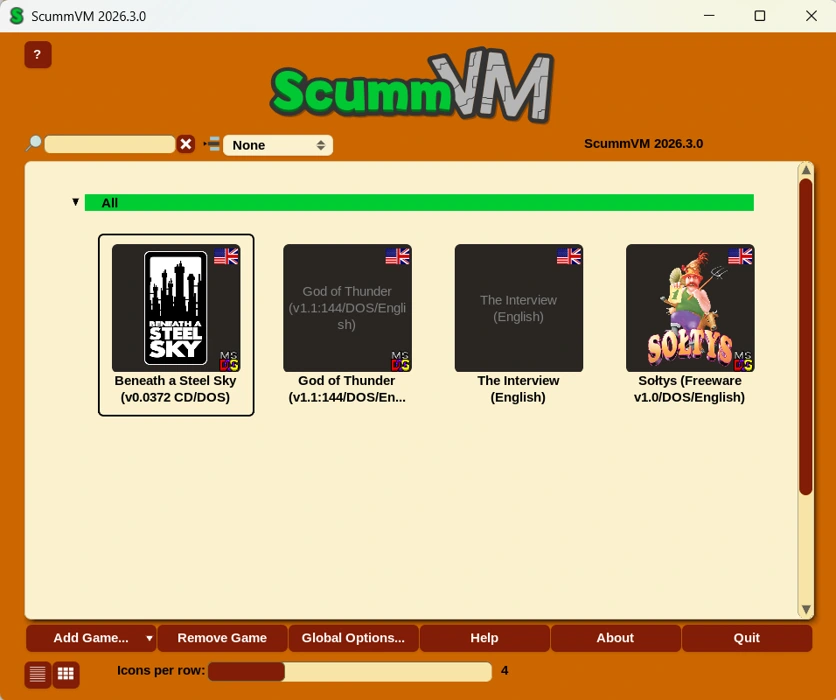
Eugene Sandulenko is a ScummVM project leader and contributor to adventure support. His work shows that preservation involves more than saving files: it requires understanding how software behaved and reproducing that behaviour on other systems.
The official credits reveal a team far larger than its leadership. His personal contribution sits within shared development maintaining access to games, audio systems and behaviours that would otherwise become increasingly difficult to experience.
Sources and personal accounts
Frank CifaldiVideo Game History Foundation
Frank Cifaldi founded the Video Game History Foundation. Its work studies production material, software and documentation to explain how games were made, alongside preserving their released versions.
For Monkey Island, exploring code and material with Ron Gilbert revealed cut scenes, tools and development stages. Making this research accessible distinguishes what survives in documents from speculation about what the creators might have made.
Sources and personal accounts
Ludvig StrigeusScummVM's beginnings
Ludvig Strigeus is credited as ScummVM's original author. Through new implementations of game engines, the project allows many adventures to run on different systems as their original machines become less common.
His founding contribution belongs alongside the developers' later collective work. ScummVM is not a collection of the games and does not replace their required data; it supplies software for using them and keeps many Lucas adventures accessible.