 EN ROUTE TO THE CARIBBEAN · SINCE 1999
Lucasfilm Games / LucasArts · 1995
Before we begin
A space mission to stop an asteroid takes three humans much further than expected. An alien world to interpret, incomprehensible machines and the relationship between the protagonists support a science fiction adventure with a more serious tone.
Adventure materials
- Italian solution · PDF ↗ [In Italian]
- Download the saves (version 1995) (zip file 500 Kb)
- Download the saves (version 2007) (zip file 750 Kb)
- Download the manual (3.7Mb)
Saves and patches refer to the editions indicated in the names or descriptions. They are not copies of the full game.
Information, images and materials from the collection
The complete text can anticipate events in history. The compatibility information and requirements refer to the editions described.

© Lucas Arts 1995
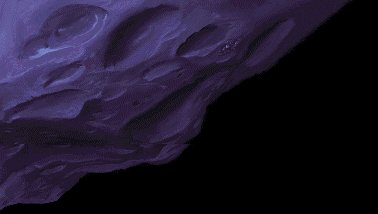
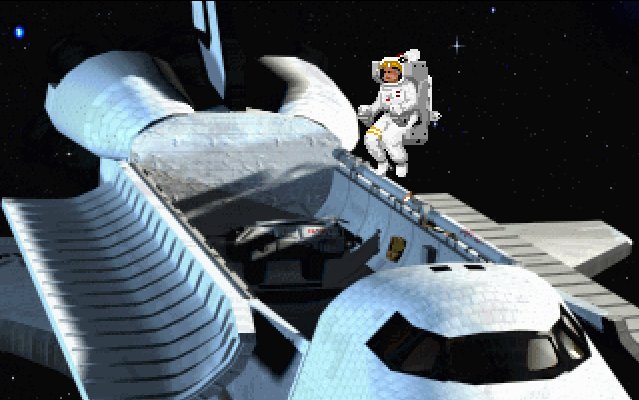
Basato su di una idea di Steven Spielberg . Gli effetti visivi sono stati realizzati dalla Industrial Light and Magic. Un asteroide è in rotta di collisione con la Terra, l'unica speranza per l'umanità è quella di inviare un equipaggio di astronauti con il compito di arrestare la folle corsa del corpo celeste con delle cariche nucleari fatte brillare sulla sua superficie. Una volta lì però i protagonisti si accorgono che in realtà l'asteroide nasconde una astronave aliena, che una volta attivatasi li trasporta su di un pianeta lontano anni luce dalla nostra galassia. Qui cercheranno di trovare il modo tornare a casa, venendo in contatto con una civiltà aliena estintasi da tantissimo tempo padrona di una tecnologia ed una sapienza superiori (come ad esempio la vita eterna). In realtà si scoprirà che gli extra-terrestri non sono propriamente morti ma si trovano in una dimensione parallela dove vivono in una nuova, perfetta ed imperitura realtà, di cui, però, sono prigionieri. Alla fine il capo della spedizione, Boston Low, troverà il modo di aiutare gli abitanti di questo pianeta a tornare alla loro naturale condizione ed in cambio otterrà la possibilità di far rivivere i suoi compagni morti nel corso della storia e, soprattutto, la possibilità di ritornare sulla Terra.
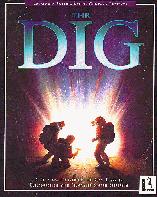
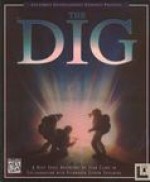
The Dig is a graphic adventure science fiction video game created by LucasArts in 1995. The story of the video game is by film director Steven Spielberg while the screenplay is by Sean Clark and Orson Scott Card.
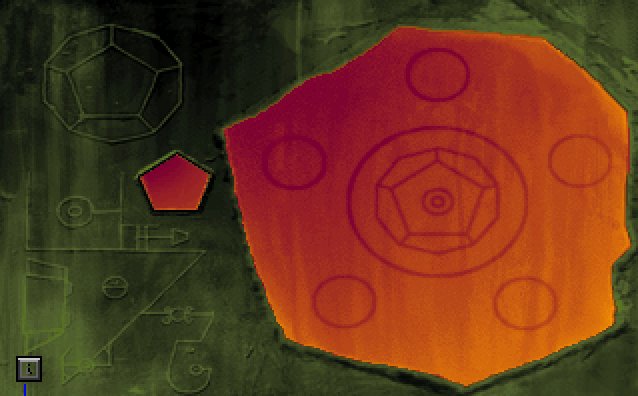
Based on the SCUMM engine, it allows the player to act as the captain of a space mission, Boston Law. The game focuses on solving puzzles by combining different objects found in various environments.
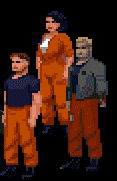
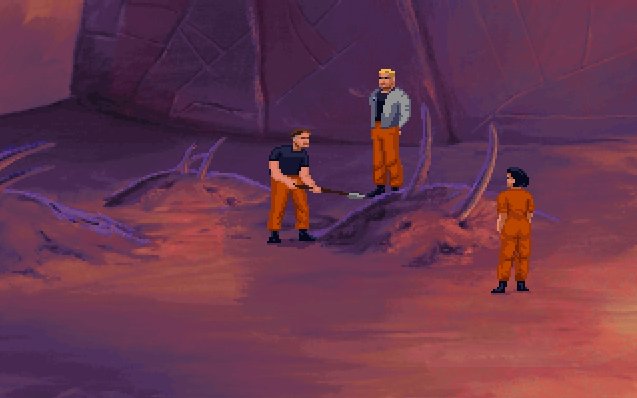
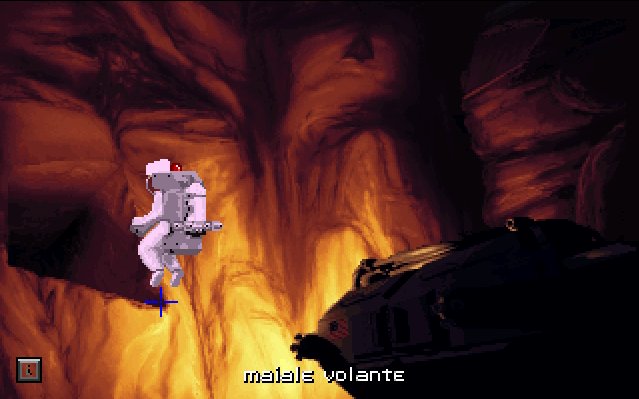
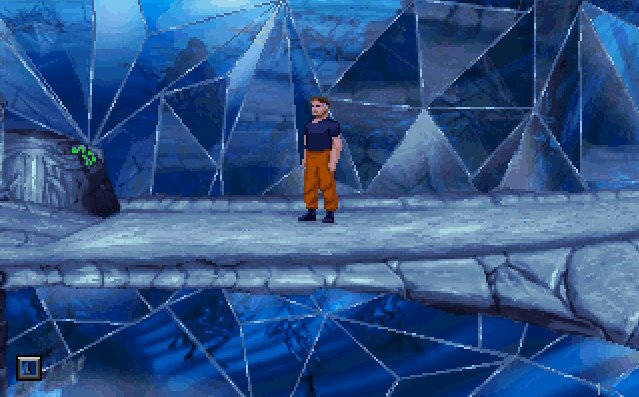
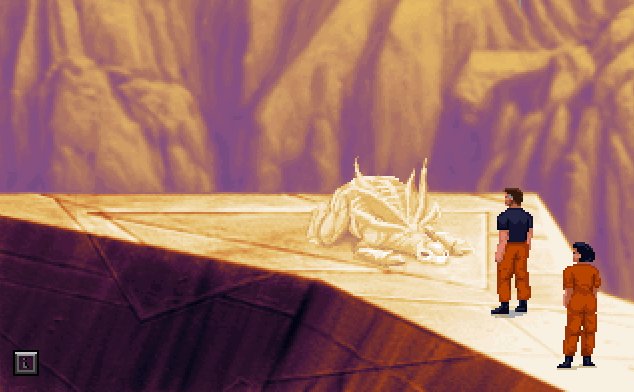
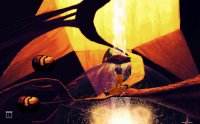
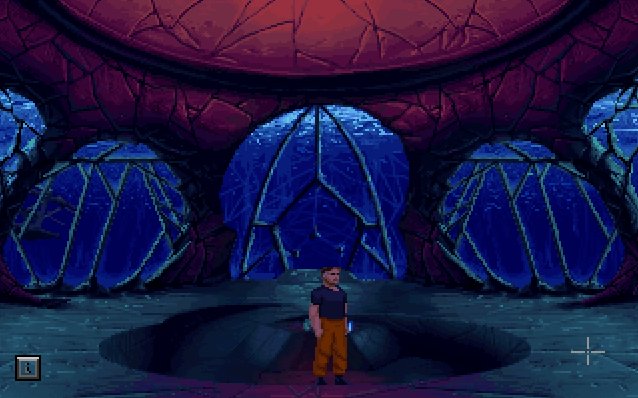
The game is characterized by very refined backdrops and settings, unlike the appearance of the characters which does not fully exploit the technology of the time. The relative technical "backwardness", compared to the times in which the game was released, meant that this adventure went unnoticed compared to other Lucas adventures, despite being well within the standards requested by fans of this genre, in terms of plot and playability. Even though 3D graphics became increasingly widespread in those years, "The Dig" does not use polygons, dynamic lights or zoom; the animated sequences mainly use cartoon-style images or not very successful digitalisations, but, nevertheless, they are largely functional to the atmosphere of the game. The expressions of the characters during the cut-scenes leave some doubts, too cartoonish and distorted compared to the seriousness of the story. During the game the 3 protagonists do not change their expressions much, as has always happened in the past. In fact, since the days of Monkey Island or Indiana Jones, Lucas characters have never been characterized by too many expressions (with the exception of Sam & Max), especially for technical reasons, leaving the task of characterizing their emotions to the texts. In purely comic adventures, this fact made some scenes even more hilarious, such as when, in Monkey Island II, Guybrush sways his head to follow the dance of the two skeletons, or remains in his underwear while lifting the bone stolen from a grave. In a serious adventure like "The Dig", it could have been a flaw - especially when compared to the characters of Full Throttle - but the excellent sound makes this detail almost insignificant. Indeed, during the scene in which Boston frees Brink, trapped in a crack, who knows how many gasped and perhaps turned away; all this exclusively thanks to the very dark music and the dialogues full of suffering. I'll leave the surprise to those who haven't played it yet...
The Italian dubbing is well done, but some doubts could be raised about Brink's speech, which has been given a strange accent that could - or would? - vaguely remember the Russian one.
The beautiful soundtrack is composed by Michael Land, former author of the music for Monkey Island. The themes are composed of long carpets of keyboards, on the border between classical music and new age in the style of Vangelis (in particular the opening theme of Blade Runner). Among the pieces used there are also quotes taken from Wagner. Often the music, during some crucial or particularly emotional moments, increases in volume; this happens, for example, when you get on a tram and your underwater journey is shown.
The interface is very intuitive: with the left button you move and, by clicking on an object, you examine it, use it, open it. With the right mouse button you recall the inventory, from which you can select the objects to use. There are no verbs, but this "simplification" should not be seen as a flaw: after years Lucas also realized that if you click on a door it is because you want to open it, or on a rock because you have to push it or examine it; therefore these verbs can be eliminated. There is a lens in the inventory, which allows you to "examine" an object instead of using it.
The game has a well-calibrated difficulty. It's hard to get stuck for a long time without knowing what to do. At most, it may happen that you do not realize that there is an object hidden in the ground, or an edge on which to interact, often retraceable only with careful "pixel hunting".
The adventure is not excessively long; a fan of the genre could finish this game in a few days, but just like the various Monkey Island and Indiana Jones games, it is very easy to replay it willingly in the future, even just to follow the story.
In 2007 LucasArts published a new version of "The Dig", identical in all respects to the 1995 version, but fully functional, without having to use any emulator, on current systems and computers.
Albums:



-
Italian solution · PDF ↗ [In Italian]
- 8MB Ram
- 2x CDROM
- 256 color VGA/MCGA
- Sound Blaster 2.0, Sound Blaster Pro, Sound Blaster 16, AWE 32, Pro Audio Spectrum, Ensoniq Soundscape, Gravis UltraSound, and 100% compatibles. Input
- 1MB of free Hard disk space
Project direction, subject and design:
Sean Clark
Texts:
Sean Clark &
Orson Scott Card
Collaboration on the subject:
Steven Spielberg, Brian Moriarty
Producers:
Camela Boswell
Programmers:
Gary Brubaker (sup.),
Livia Mackin, Jonathan Ackley, Mark Crowley, Sean Clark
SCUMM Story System:
Aric Wilmunder, Brad Taylor, Aaron Giles
Artistic direction:
Bill Eaken
Backdrops:
Bill Tiller (sup.),
Adam Schnitzer, Bill Eaken
Animators:
Sean Turner & Kevin Boyle (sup.),
Charlie Ramos, Graham Annable, David DeVan, Chris Miles, Geri Bertolo
Effect animation:
Chris Green & Gordon Baker
3D graphics:
Ralph Gert, Marc Benoit, Dan Colon, Ron Lussier
Additional animations for sequences:
Mechadeus e
Industrial Light & Magic
Graphic technicians:
Michele Harrell, Jillian Moffett, Kim Lyons Balestreri, Japeth Pieper, Llesle Aclaro, Rachael Bristol, Chris Weakley, Aaron Muszalski, C. Andrew Nelson
Music:
Michael Land, with pieces from Wagner
Sound:
Clint Bajakian & Michael Land
iMUSE system:
Michael Land, Peter McConnell, Mike McMahon
Testing:
Chris Purvis (sup.),
Ryan Kaufman, Rachael Bristol, Dan Pettit, Theresa O'Connor, Matthew Azeveda, Scott Douglas, Reed Derleth, Jo "Captain Tripps" Ashburn
Compatibility tester:
Doyle Gilstrap (sup.),
Jim Davison, Paul Purdy
INSANE System:
Vince Lee, Matthew Russell
Direction and production of voices:
Darragh O'Farrell
Entries:
Robert Patrick (Low), Mari Weiss (Robbins), Steven Blum (Brink)
Packaging:
Soo Hoo Design (packaging design), Bill Eaken (packaging illustration), Shepard Associates (manual design)
Collaborators:
Peter Chan (alien creature graphics), Bill Tiller, Michael Slisko, Anson Jew, Peter Tsacle, Paul Topolos (additional animations), Kim Balestreri, Japeth Pieper (animation coloring), Mike Levine, James Byers (visual effects graphics technicians), Paul LeFevre (installation utility programming)