 EN ROUTE TO THE CARIBBEAN · SINCE 1999
Lucasfilm Games / LucasArts · 1987
Before we begin
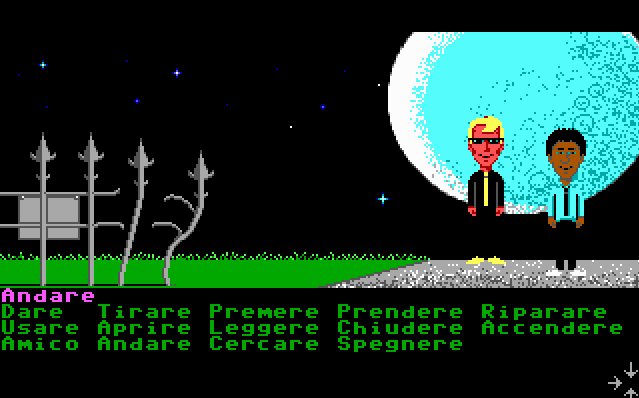
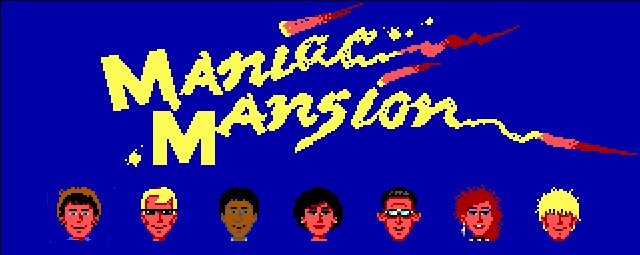
An isolated villa, an unpredictable family and a group of kids: choose your team and try to save Sandy. The characters' abilities open up different paths and invite you to experiment.
Adventure materials
Saves and patches refer to the editions indicated in the names or descriptions. They are not copies of the full game.
Information, images and materials from the collection
The complete text can anticipate events in history. The compatibility information and requirements refer to the editions described.

© Lucas Film LTD 1987
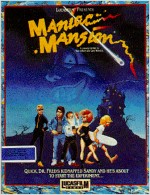
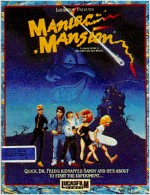
The first graphic adventure released in 1987 by Lucasfilm Games (now known as LucasArts). It is the debut of the legendary Scumm system (Script Creation Utility for Maniac
Mansion), è l'esordio del grande Ron Gilbert quando ancora militava fra le schiere
della Lucas.
Una storia intrigante, che vede protagonisti dei giovani
che indagano sui misteriosi eventi che avvengono in una isolata villa a pochi metri dalla
quale 20 anni prima è caduto un meteorite. Presto i nostri eroi di accorgeranno
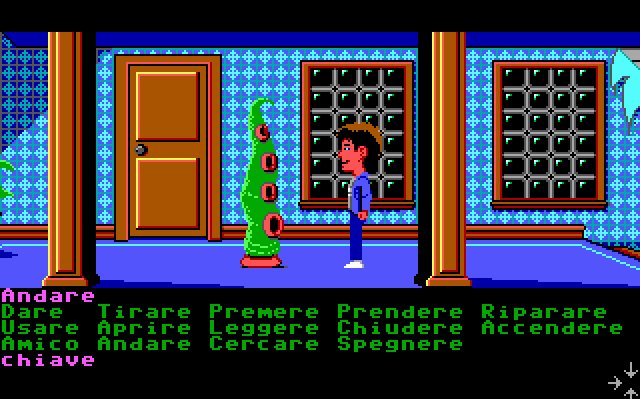
dell'esistenza di esseri mutati creati da un folle scienziato, il dottor Fred e dalla
infermiera Edna. Questi esseri sono dei tentacoli pensanti. Ma con astuzia e ingegno alla
fine risolvono il mistero e il protagonista Dave salverà la sua ragazza Sally.
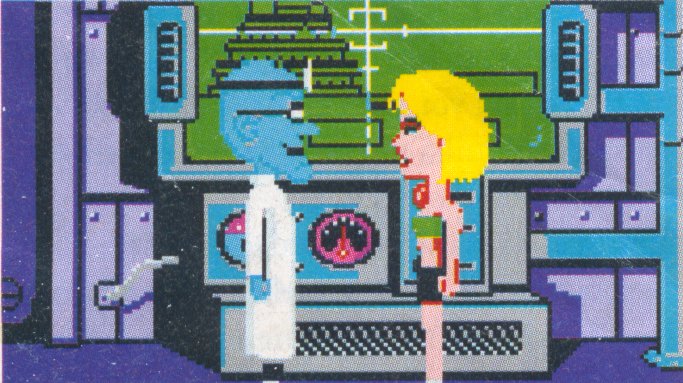
Maniac Mansion is notable for its multiple possible endings, depending on which characters the player chooses to use (and which ones survive) and the actions taken. For example, you can send your antagonist into space, or have him arrested by the Meteor Police, or make him famous by publishing his autobiography.
The game is also known for its famous useless item: a chainsaw for which fuel cannot be found, despite many hopeful rumors to the contrary. Since this is a game by LucasArts, famous for humor bordering on the surreal, in the second SCUMM game, Zak McKracken and the Alien Mindbenders you can find some petrol "only for chainsaws", but - naturally - no chainsaw (not to mention that, when trying to collect it, the protagonist will refuse to do so, saying that it is for another game). Also, in a later remake of Maniac Mansion, the protagonists find a Zak McKracken game poster in the arcade room, which reads "I wonder what the gas can was for on Mars." As a further reference, the entire game is contained in its sequel, Day of the Tentacle, on a computer in one of the characters' bedroom. Again, the staircase in the library (with a sign, "staircase out of order") appears to be a puzzle to be solved, but in reality there is no way to fix the staircase or use it (to fix it, a saw would have been needed, in order to obtain wooden beams...).
In Maniac Mansion the Chuck plant also makes its first appearance, in the library; Chuck can be found in practically all subsequent LucasArts adventure games, and in several games from other publishers.
The game was originally released for the Commodore 64 and was the first game to use the SCUMM engine, which allowed it to be ported to other platforms rather quickly.
Maniac Mansion was ported in 1988 for PC with EGA graphics scalable to CGA. The project manager was Ron Gilbert who worked on it with Gary Winnick. The game was written by Ron Gilbert and David Fox. Later versions were released for Apple II, Amiga, and Atari ST.
In 1990, Maniac Mansion was ported by Jaleco for the Nintendo Entertainment System. This conversion was censored in various aspects, in language and graphically (some nude statues were removed). After releasing the game on the market, Nintendo introduced other complaints in a new version. In this regard, in the early 1990s, programmer Douglas Crockford, who was responsible for the conversion, wrote a note entitled The Expurgation of Maniac Mansion in which he detailed the problems he had with Nintendo during his work.
Albums:
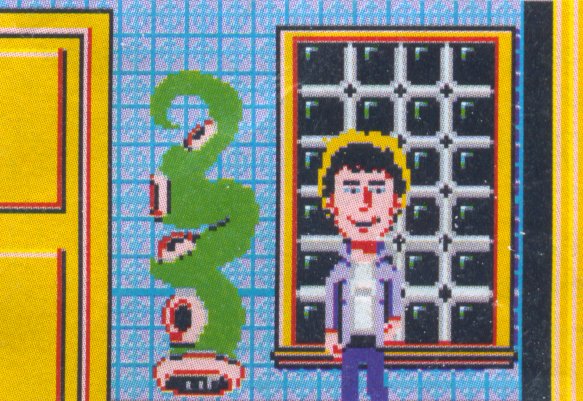
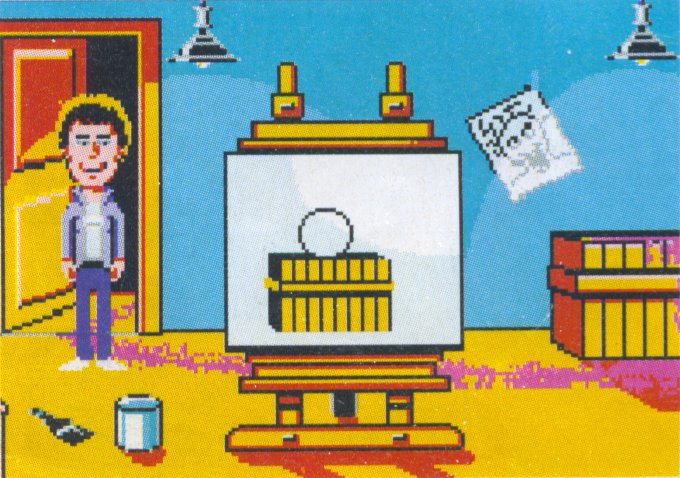
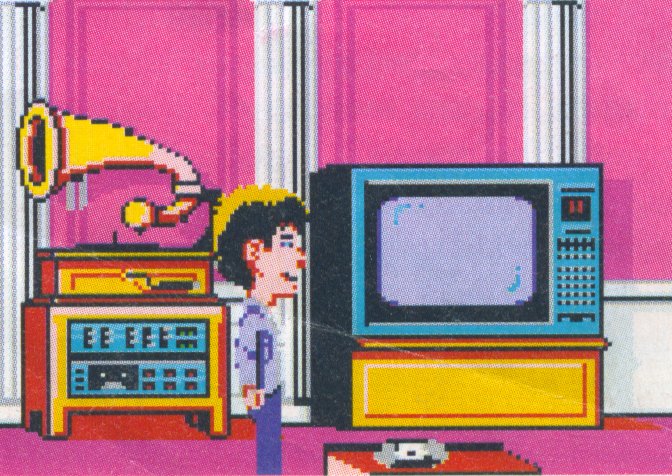
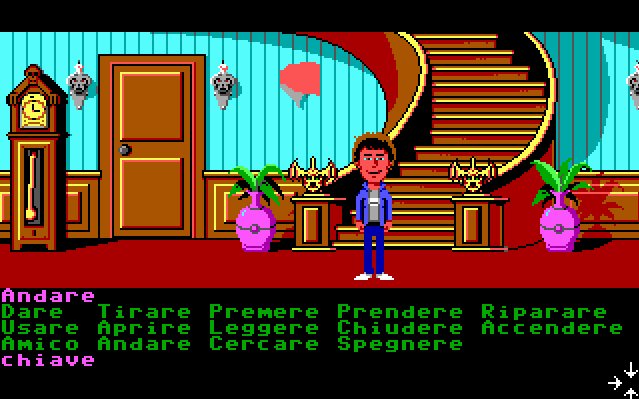
- 640kb required
- 256 color VGA/MCGA
- adlib, soundblaster, internal speaker
- 3.5" disks
Subject and design:
Ron Gilbert & Gary Winnick
Texts and programming:
Ron Gilbert, David Fox, Carl Mey
SCUMM Story System:
Ron Gilbert
Backdrops and animations:
Gary Winnick
Music:
Chris Grigg & David Lawrence
Sound:
Chris Grigg
Packaging:
John McLaughlin (package design and manual), Ken Macklin (package illustration), Steve Purcell (back of package illustration for the 1990 re-release)