 EN ROUTE TO THE CARIBBEAN · SINCE 1999
The magazine
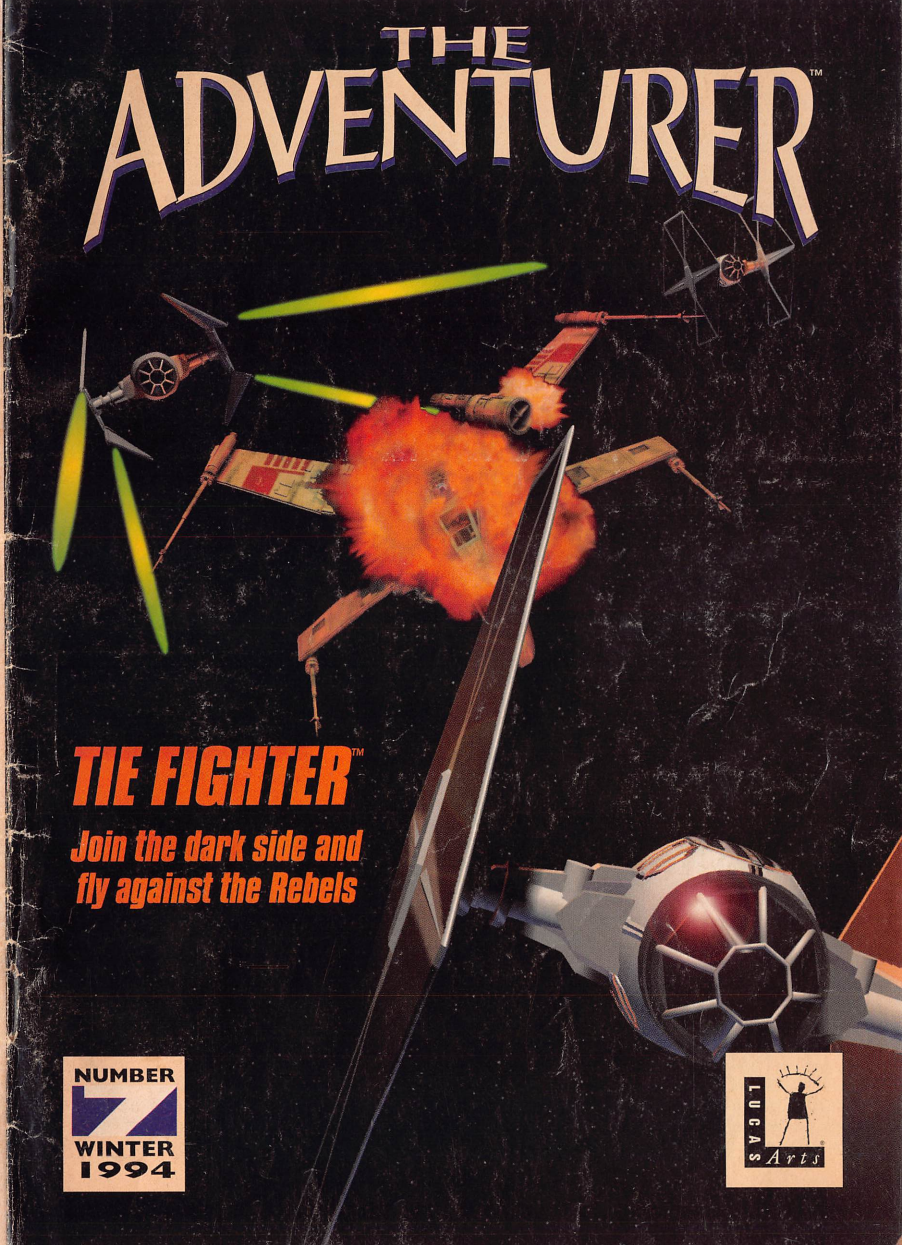
The editorial introduces issue 7 as a glossy mini-magazine expanded with a catalogue of LucasArts products. TIE Fighter is on the cover; previews, technical support, interviews and mail-order shopping share its pages. The printed date is Winter 1994: the Routes through Time entries follow that date without inventing a publication day.
Printed copy and scans supplied by the webmaster. Original English text.
Open the indexed PDF →Download the PDF ↓ · PDF · 24.0 MiB
32 original pages in reading order + 1 editorial contents page in Italian/English; 17 links and bookmarks. Original magazine numbering retained. Images not recompressed; unrestored scans.
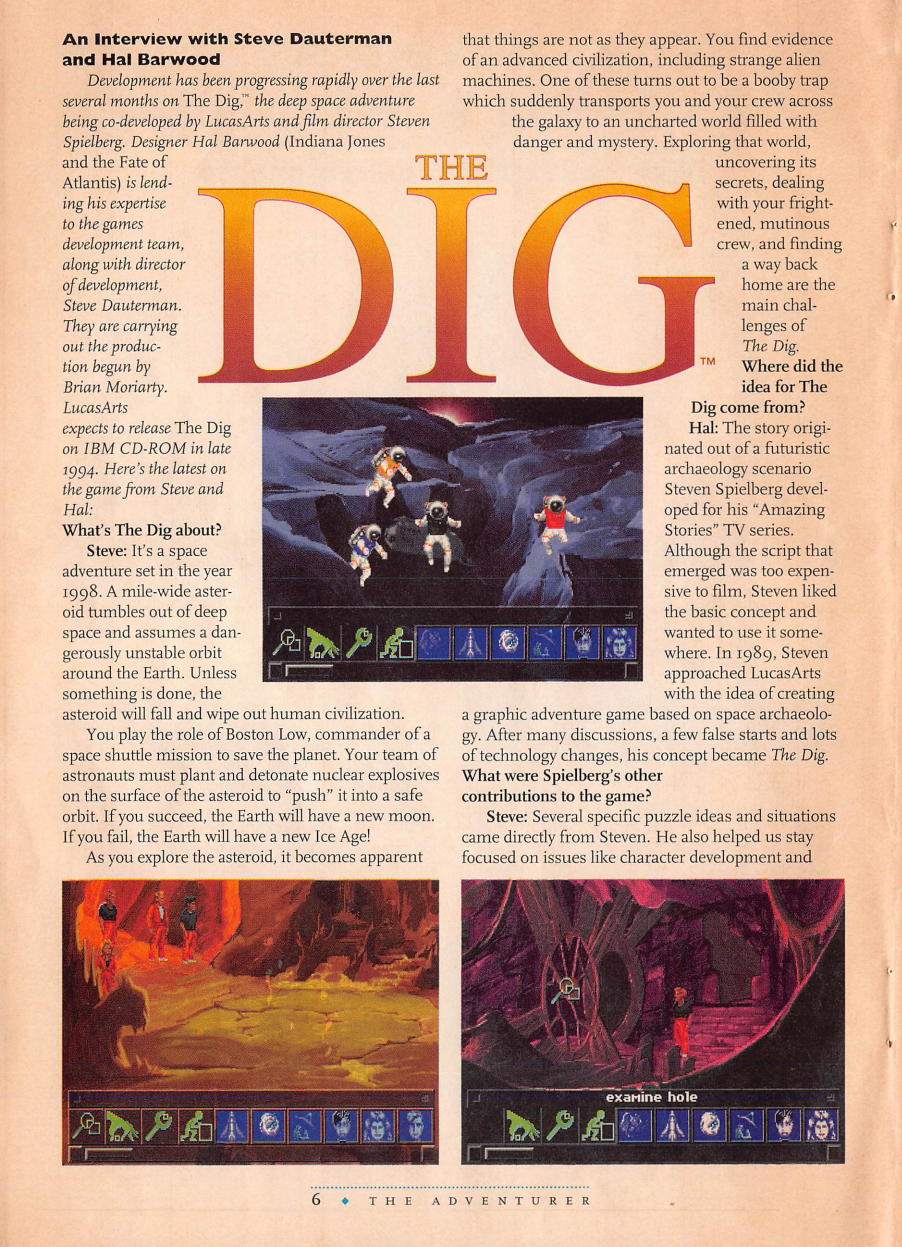
The Dig in development
On pages 6–7 Steve Dauterman and Hal Barwood describe a stage of The Dig following Brian Moriarty’s work. Release is still expected in late 1994. The expedition includes Judith Robbins and Toshi Olema; the article introduces StoryDroid, developed from Ed Kilham’s LANDRU technology. These are development announcements, not a description of the released game’s cast or engine.
The interview traces Steven Spielberg’s space-archaeology idea and his contributions to situations and puzzles. Dauterman also recalls Spielberg calling for Day of the Tentacle hints: a recollection attributed to the interviewee, not dialogue from the game.
Source: The Adventurer issue 7, Winter 1994, webmaster’s copy. · pp. 6–7
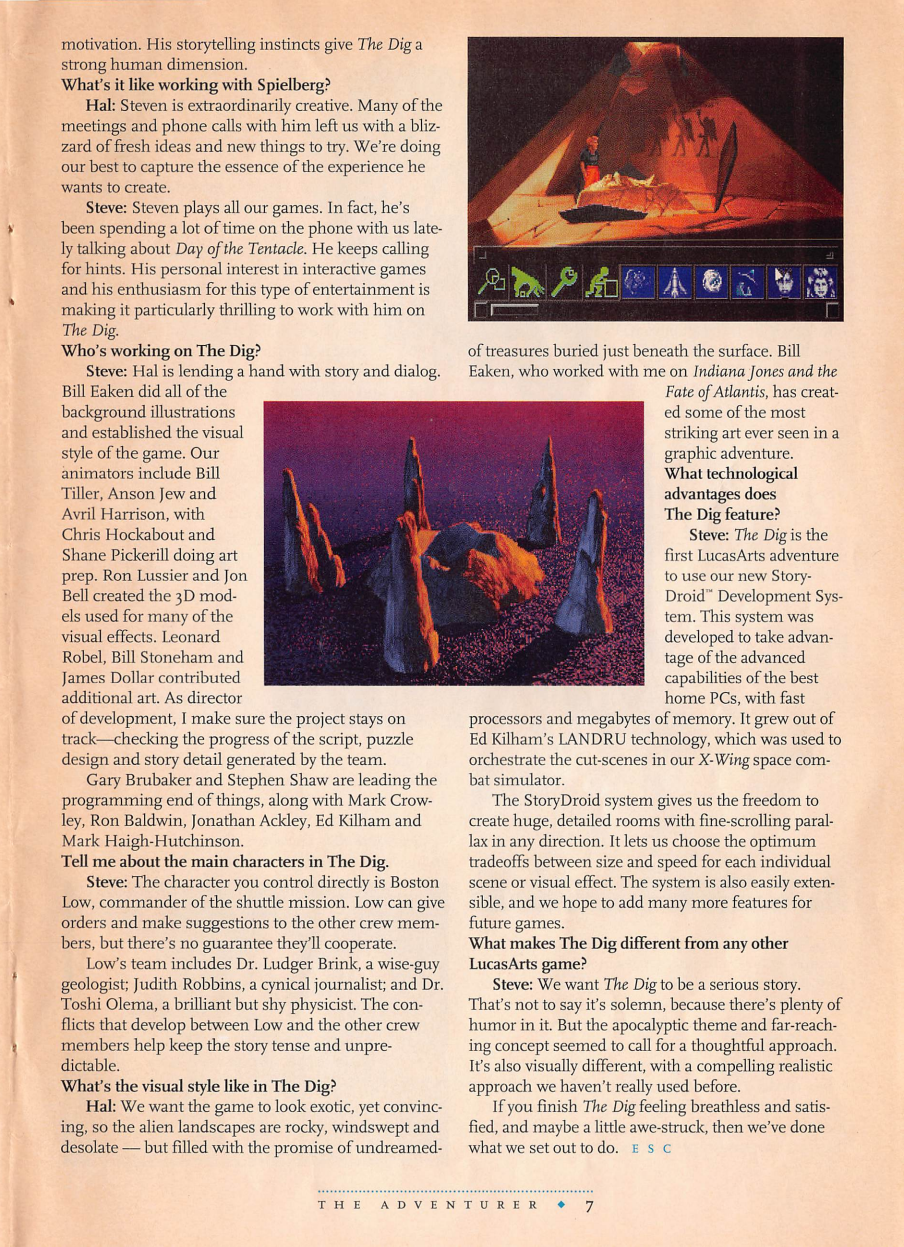
The 3D workshop
On pages 8–9 Collette Michaud and Aaron Muszalski explain modelling, textures, animation and rendering. Their Sam & Max example is a 3D helicopter placed over a painted background: perspective, lighting and cartoon deformation make it fit the 2D artwork. Prerendered sequences are distinct from a fully real-time polygonal game.
Source: The Adventurer issue 7, Winter 1994, webmaster’s copy. · pp. 8–9
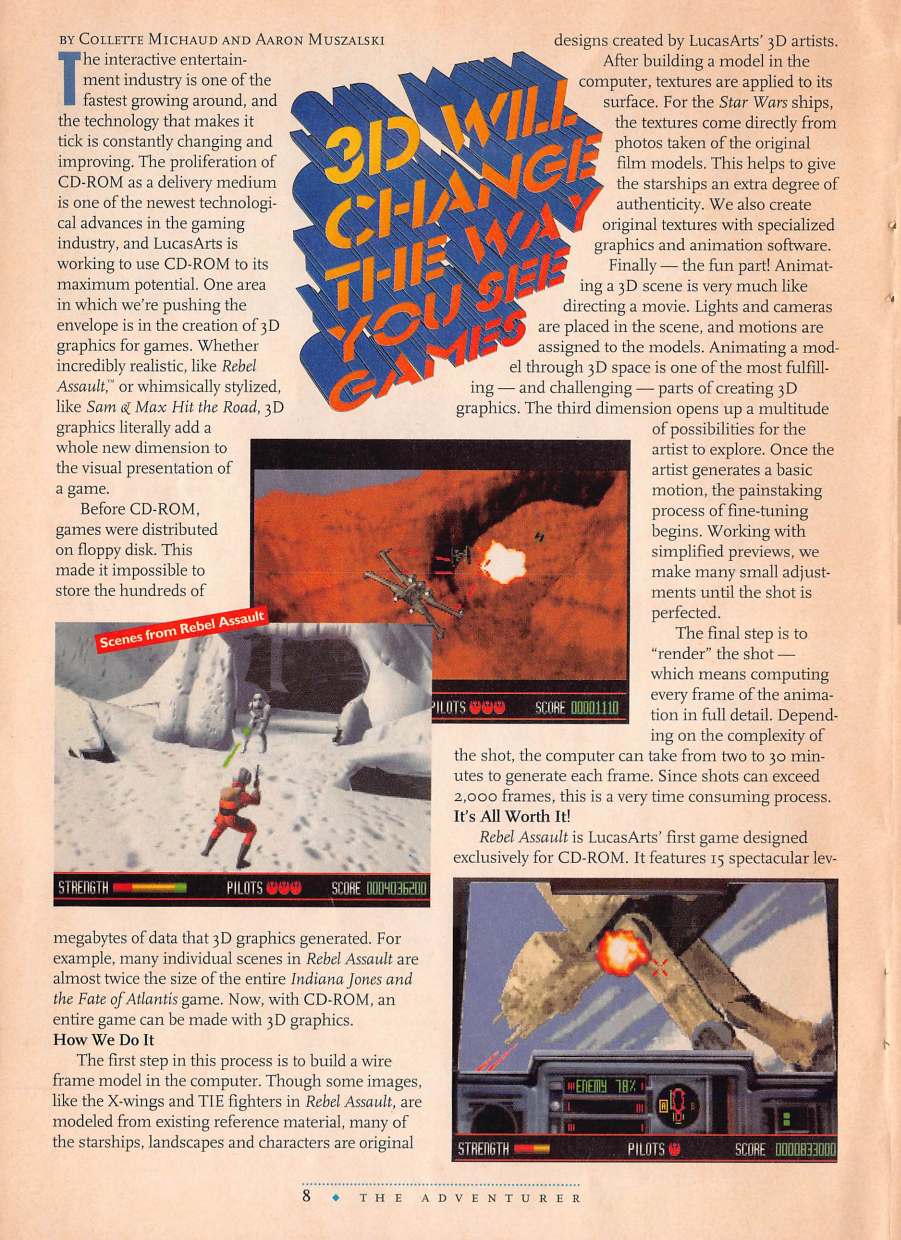
The Sam & Max board game
Pages 10–11 form Steve Purcell’s board game. Players travel counterclockwise through roadside attractions, stops and mishaps; without dice, the instructions suggest using the last digit of the next passing car’s licence plate. It resembles a race board game but has its own rules and humour. This version joins the two scans and retains the original fold and marks.
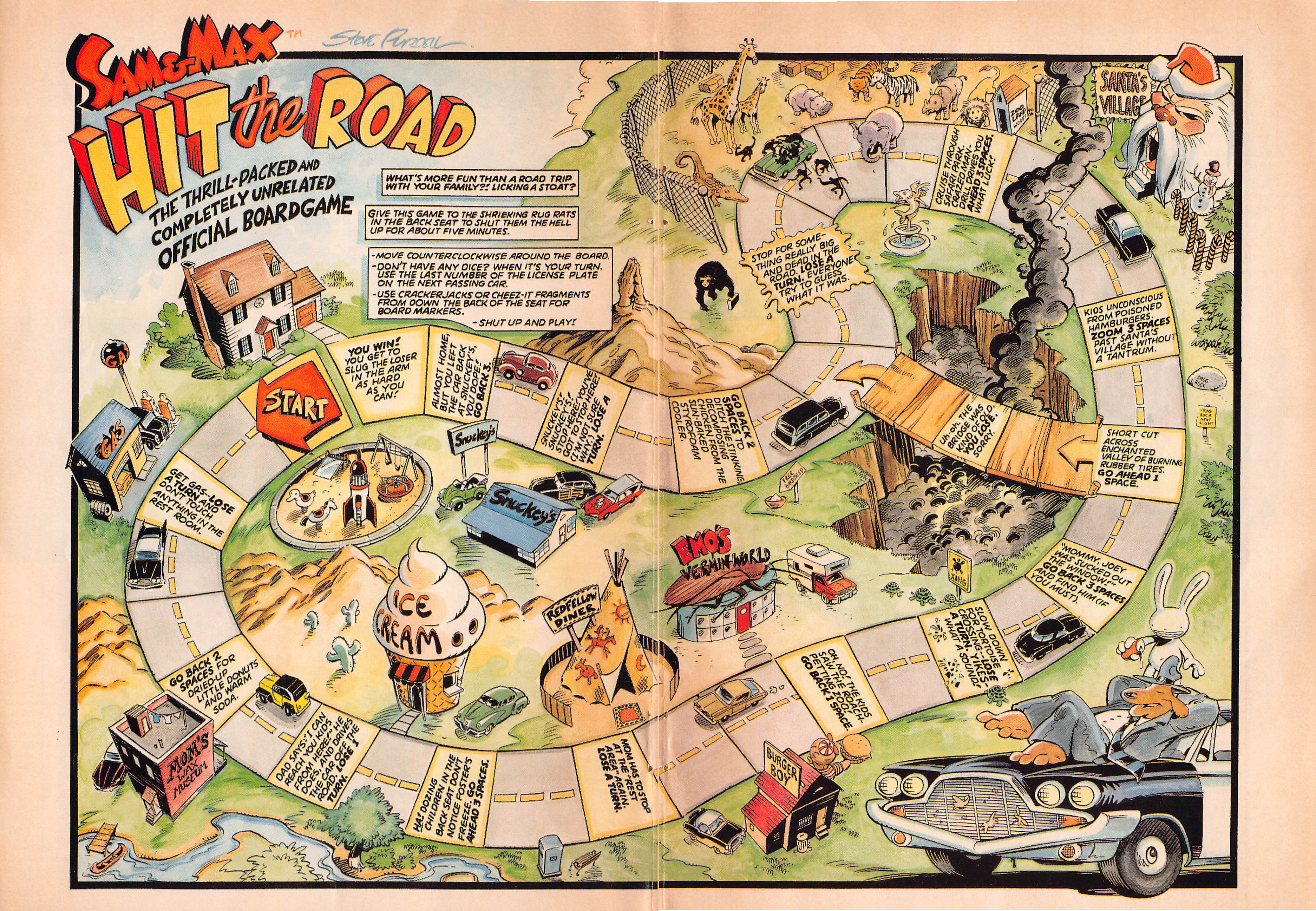
Open the assembled original board →
Source: The Adventurer issue 7, Winter 1994, webmaster’s copy. · pp. 10–11
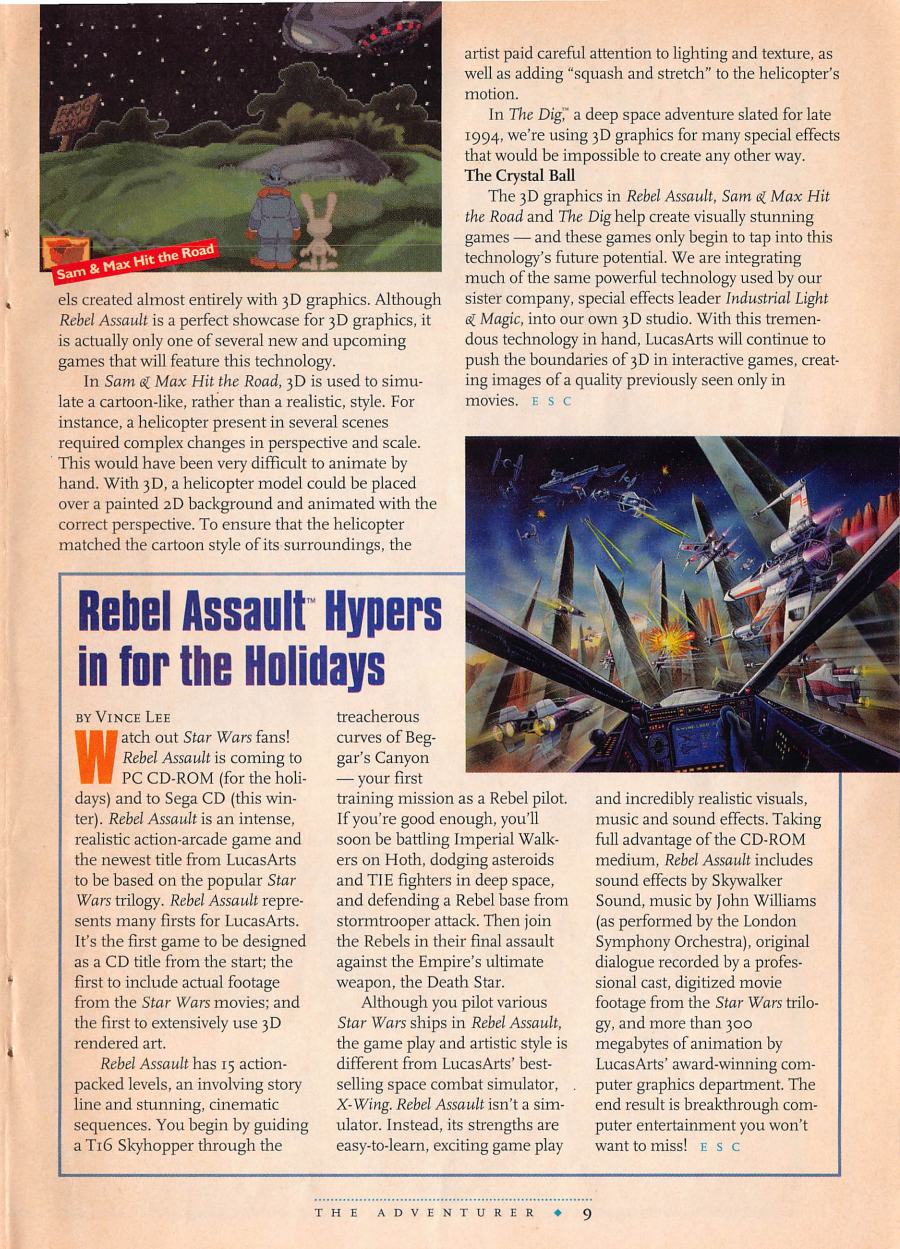
The people behind the adventures
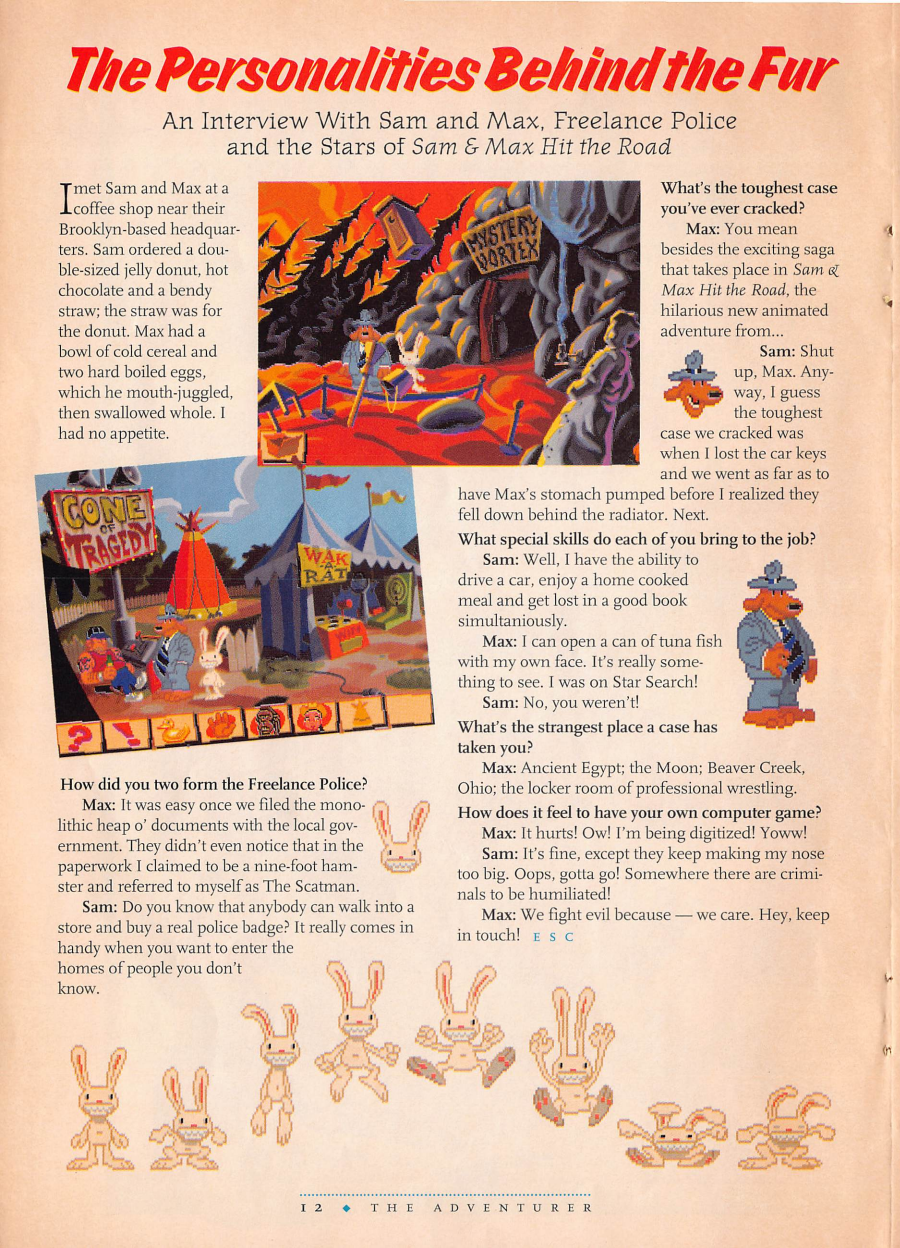
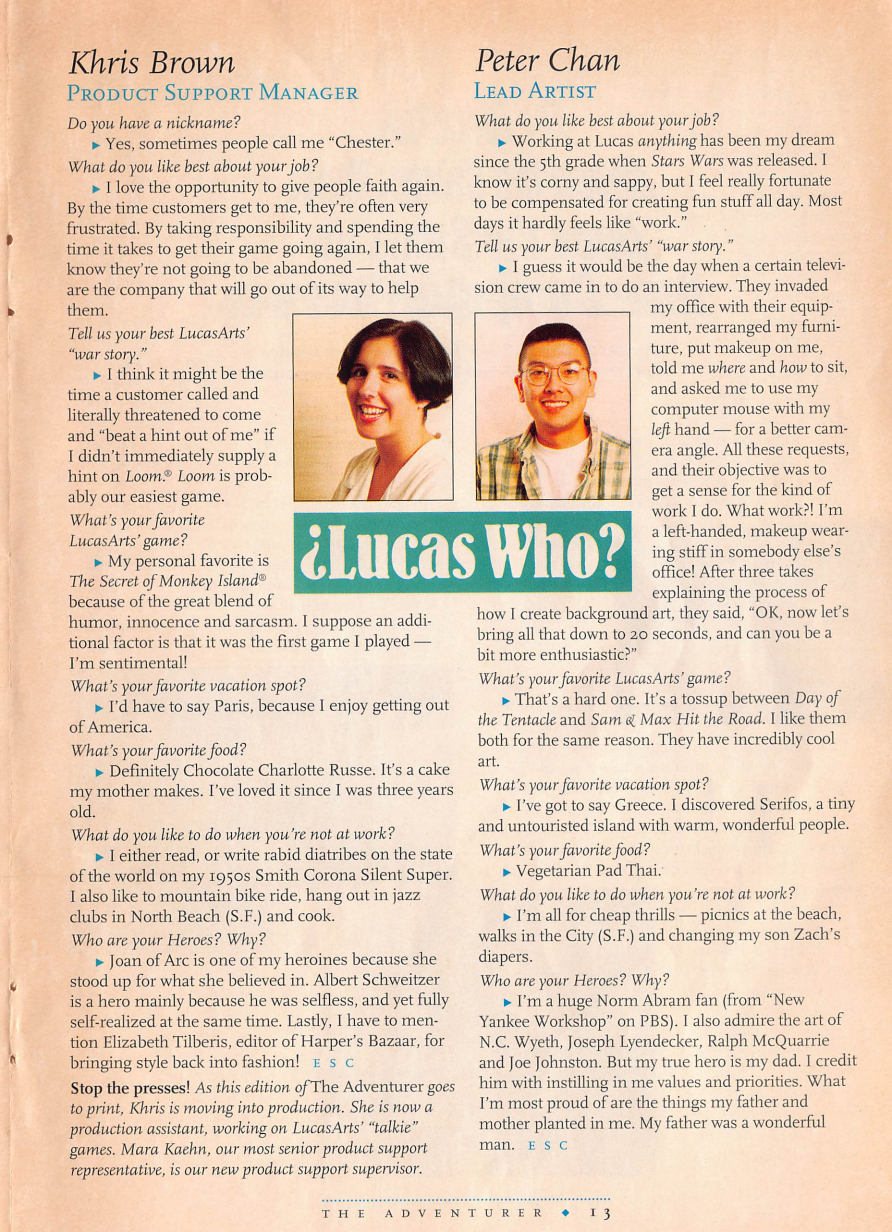
Page 12 features a fictional interview with Sam and Max. On page 13 Lucas Who? introduces real staff: Khris Brown, moving from product support into production of voiced games, and artist Peter Chan. Brown chooses The Secret of Monkey Island for its humour, innocence and sarcasm; Chan recalls a television crew asking him to use his mouse left-handed for a better camera angle.
Source: The Adventurer issue 7, Winter 1994, webmaster’s copy. · pp. 12–13
Games, editions and collectibles
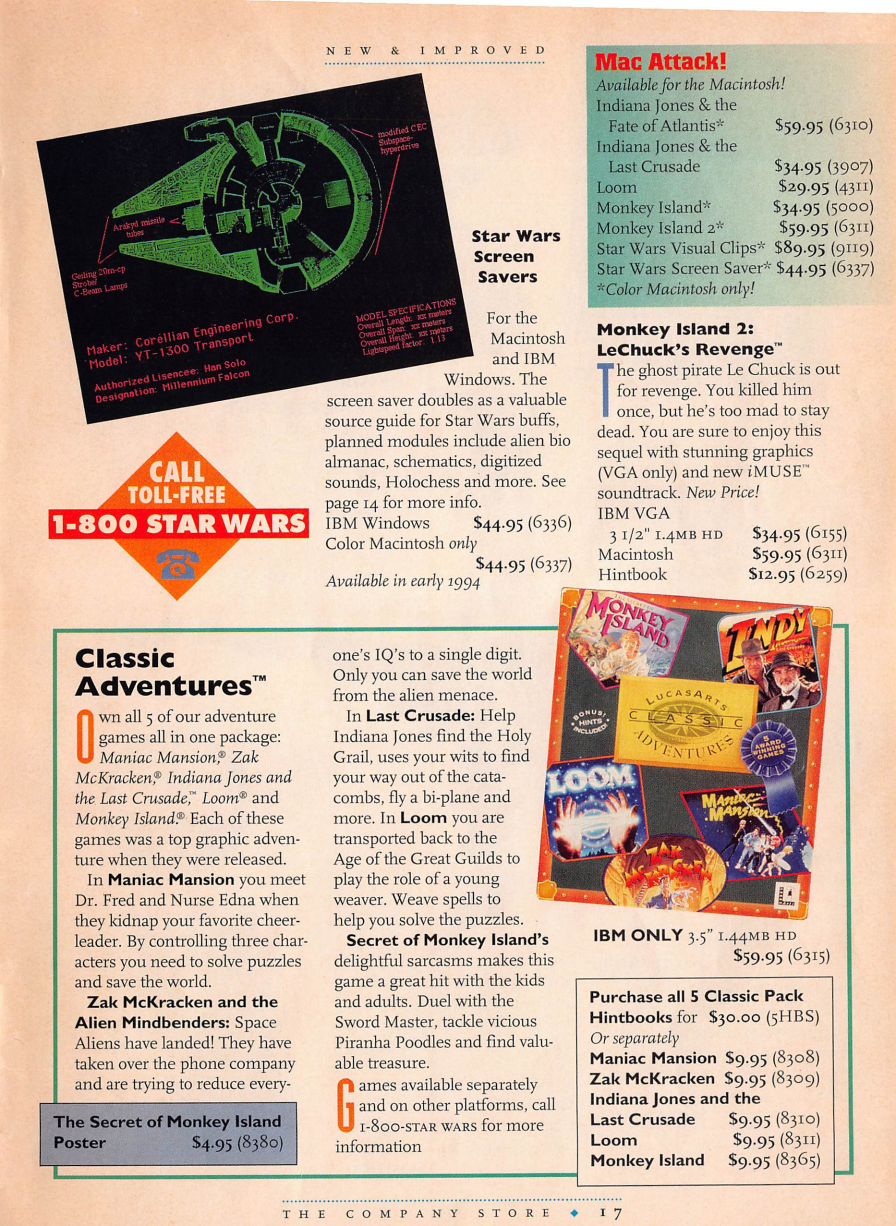
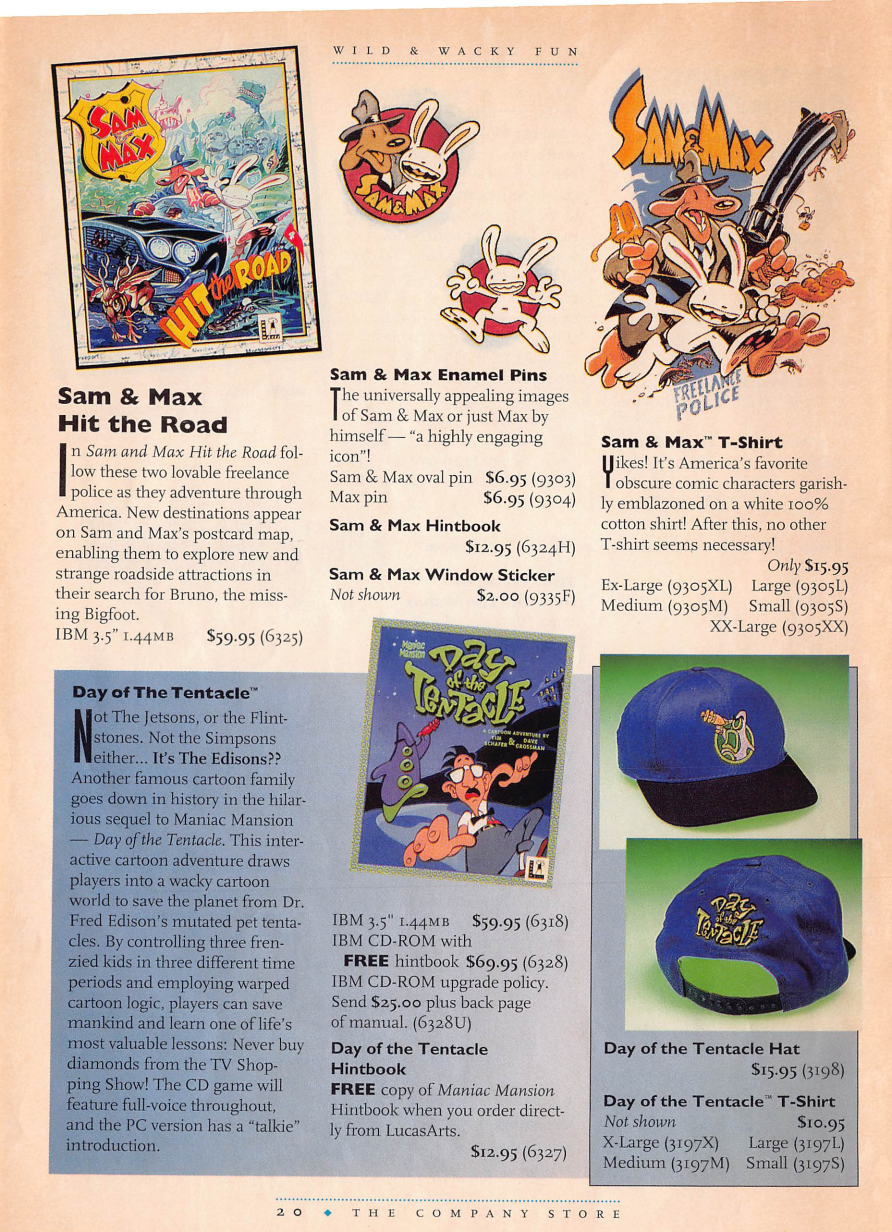
The Company Store documents games, hint books, comics, posters, pins and clothing. Page 17 features Monkey Island 2 and Classic Adventures; page 20 features Sam & Max and Day of the Tentacle. Prices and availability are catalogue claims from the period. An advertised or announced platform alone does not establish that an edition was eventually released.
Source: The Adventurer issue 7, Winter 1994, webmaster’s copy. · pp. 15–31
Browse the pages
Enlarge the scans in the shared photo viewer. Numbers refer to magazine pages; the added contents page comes first in the PDF.