 EN ROUTE TO THE CARIBBEAN · SINCE 1999
Cinema and graphic adventures
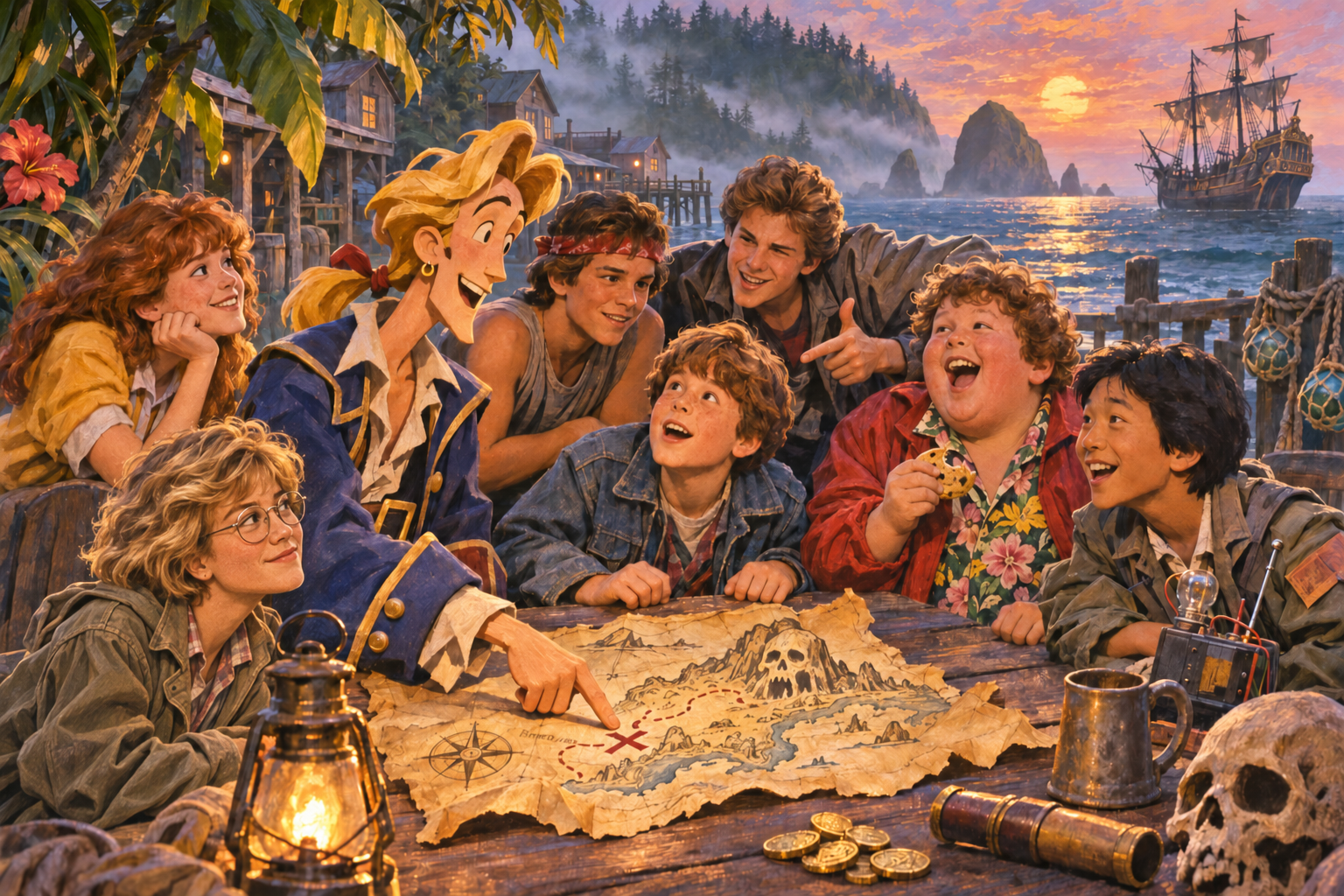
An old map, a hidden passage and a treasure that seems to belong only to legends. In Goonies you just need to open an attic to see the world transform into an adventure. Those who accompanied Guybrush through the Caribbean know that feeling well: an object found by chance can open an entire path.
Let's put the Richard Donner film and the Monkey Island saga side by side to observe how they tell the story of the discovery. The comparisons are a reading of the site: similarities of themes and situations, without attributing to the authors a direct influence that the sources collected here do not document.
The same wind of adventure
The connection between The Goonies and Monkey Island arises from a way of experiencing adventure: the everyday world opens up to the impossible, the treasure promises a different life and a joke can arrive just when everything seems to be going badly.
The pirate atmosphere
Worn maps, caves, secret passages, doubloons and a hidden galleon: in Goonies the legend of pirates invades the kids' present. Monkey Island makes us live in that imagination, among ports, wrecks and cursed captains. In the film the protagonists chase the trail of a pirate; in the Guybrush saga he wants to become one.
Fantasy takes objects seriously
An attic can contain the beginning of a journey and a tiny object can change the way you look at a landscape. Monkey Island expands this freedom: collecting, trying and combining means looking for a possibility that we didn't see before. The fantastic makes the desire to venture beyond the known path credible.
Danger leaves room for jokes
The film alternates tension, wonder, arguments and comic responses. Children retain their character even in the face of the incredible. Guybrush and his interlocutors often do the same: the risk remains, but the conversation can take an absurd path. It is this coexistence between adventure and humor that brings the two worlds closer together, more than a single similar image.
Spielberg and the Lucas world: a concrete bridge
The Goonies was born from a subject of Steven Spielberg; ILM, founded by George Lucas, creates part of the visual effects. The Secret of Monkey Island comes out in 1990 from Lucasfilm Games. In 1995 LucasArts also published The Dig in collaboration with Spielberg. They are documented points of contact between fantasy cinema and computer adventures.
This context helps to understand why it is natural to compare them: artists, techniques and passion for adventure stories circulate in a close creative world. The comparison of the page remains a reading of atmospheres and ways of telling; does not credit Spielberg with the creation of Monkey Island and does not present The Goonies as a proven direct source for it.
Sources: Amblin · The Goonies · ILM · work on the film · Lucasfilm · the origins of ILM · Lucasfilm · history of Monkey Island and The Dig.
An attic overlooking adventure
The Goonies arrived at the cinema in 1985, directed by Richard Donner, from a story by Steven Spielberg and a screenplay by Chris Columbus. The music is by Dave Grusin. At the center there are boys who are looking for the treasure of the pirate Willy the One-Eyed to try to save their homes.
The search takes them underground, among clues, traps and a forgotten galleon. The film allows danger to coexist with the confusion of a group of friends: they argue, they make fun of each other and they find the courage to continue. This is where the comparison with Monkey Island becomes interesting, even before counting skulls and coins.
Data and presentation of the film: official card Amblin.
One map, many routes to combine
Maps are not furniture
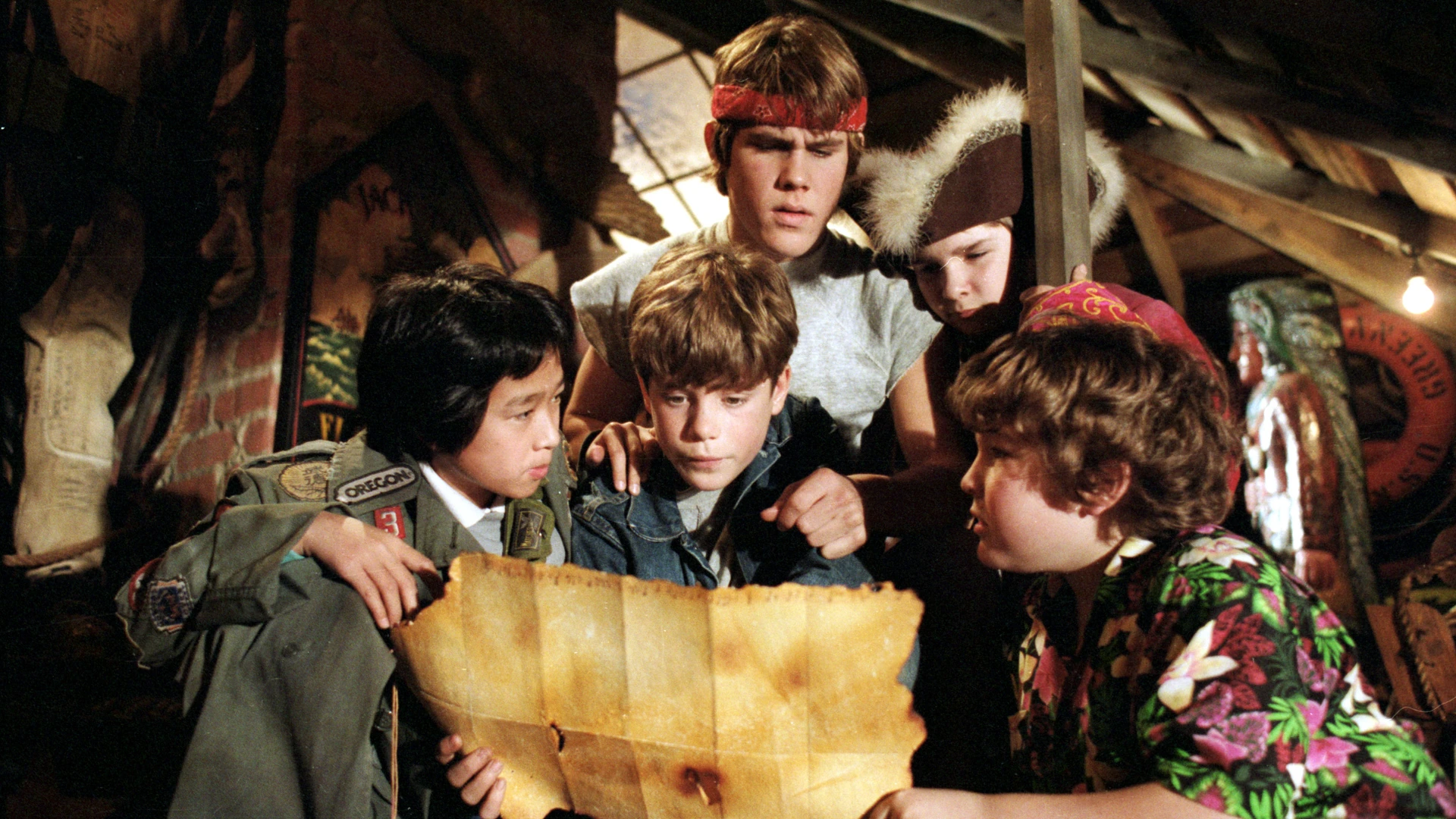
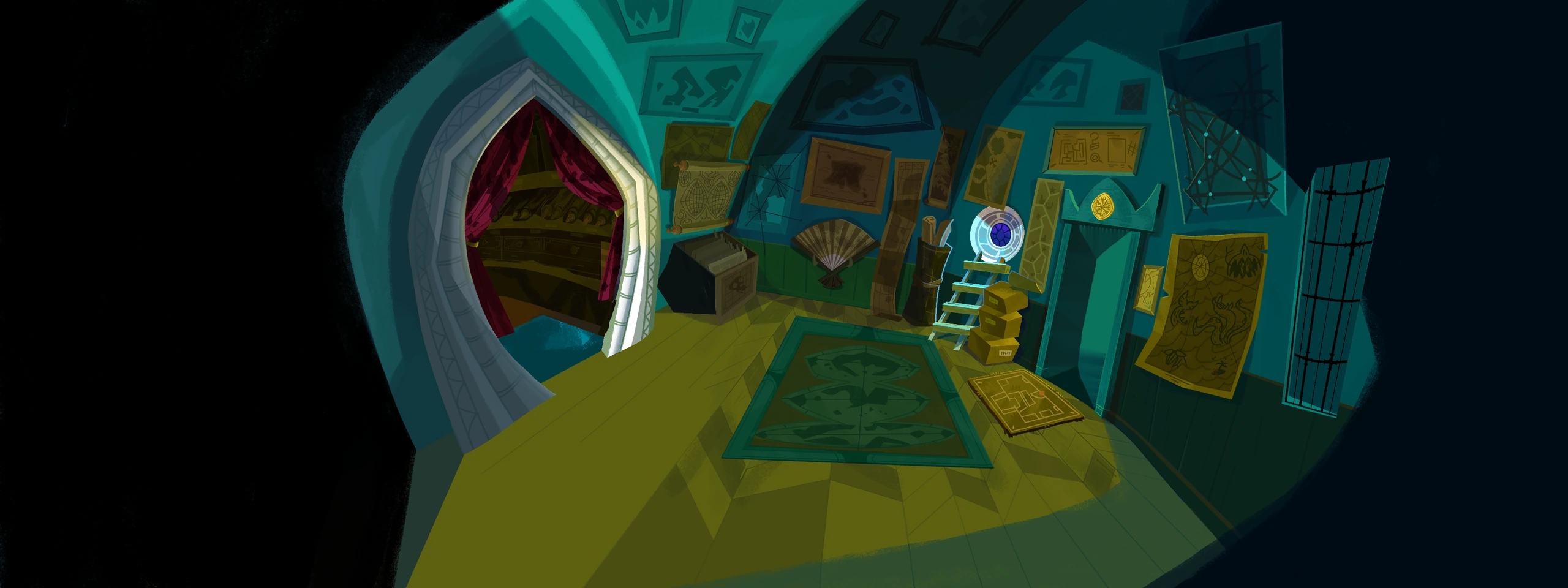
In Goonies the paper found in the attic sets the journey in motion. In Monkey Island 2 the map pieces of Big Whoop give direction to the search for Guybrush. Wally makes the cartographer's idea concrete: reading and interpreting a map is a job, as well as a promise of adventure.
Items ask to be used
The Goonies doubloon invites you to look at the landscape through an object. In the adventures of Guybrush the inventory continually asks the same question: what can I do about it? What counts is the transition from observing to trying, from having a clue to putting it to the test.
Descend below the surface
The underground path of the film transforms a familiar place into the entrance to a hidden world. The caves of Monkey Island and the guidance of the navigator's head play with a similar pleasure: the path is not seen all at once, it is discovered by continuing to advance.
When music becomes a clue
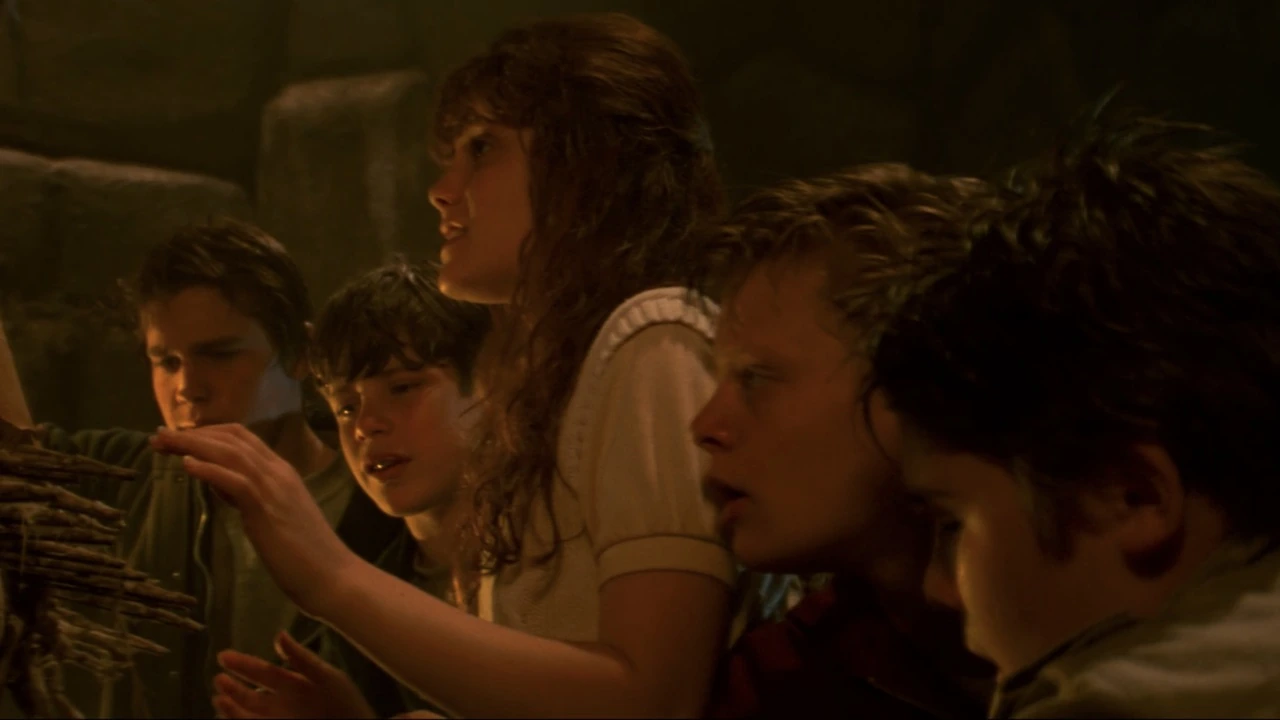
The bone organ puts a musical test in the path of the Goonies. In Monkey Island 2 the dream of Guybrush's parents links a song to the search for meaning. They are different puzzles, but both ask you to really listen to what the adventure is showing.
Other references · Contains previews of situations in the film and games
The traps and who ends up in the middle
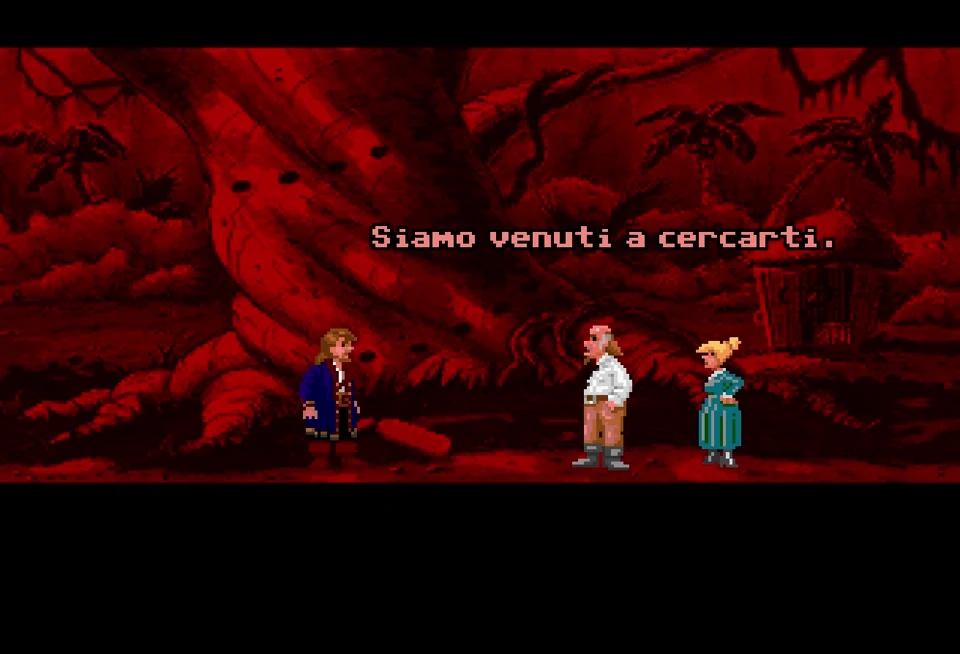
The film uses traps to set the group on the move. Monkey Island 2 can put Guybrush and Wally in the same dangerous situation, leaving dialogue and the absurd time to complicate it. The kinship lies in the alternation between tension and comedy.
A crew made of characters
Boys don't approach adventure in the same way. Guybrush also has to deal with companions, guides and helpers who have desires of their own. Curse and Tales allow us to give space to the answers, hesitations and jokes of a crew, as well as to their exploits.
The pirates continue to make themselves heard
One-eyed Willy belongs to the past, but his presence guides the entire journey. Monkey Island makes the pirate past much louder: LeChuck returns, Murray speaks and every relic can have something to say. Here the reference becomes above all a comic contrast.
The treasure changes the meaning of the journey
For the Goonies, gold has a concrete value, linked to homes and loved ones. Guybrush repeatedly goes through the desire for wealth, the curse and the search for something he imagines greater than himself. We can compare expectations without revealing the Secret of Return.
The ship that repays the wait
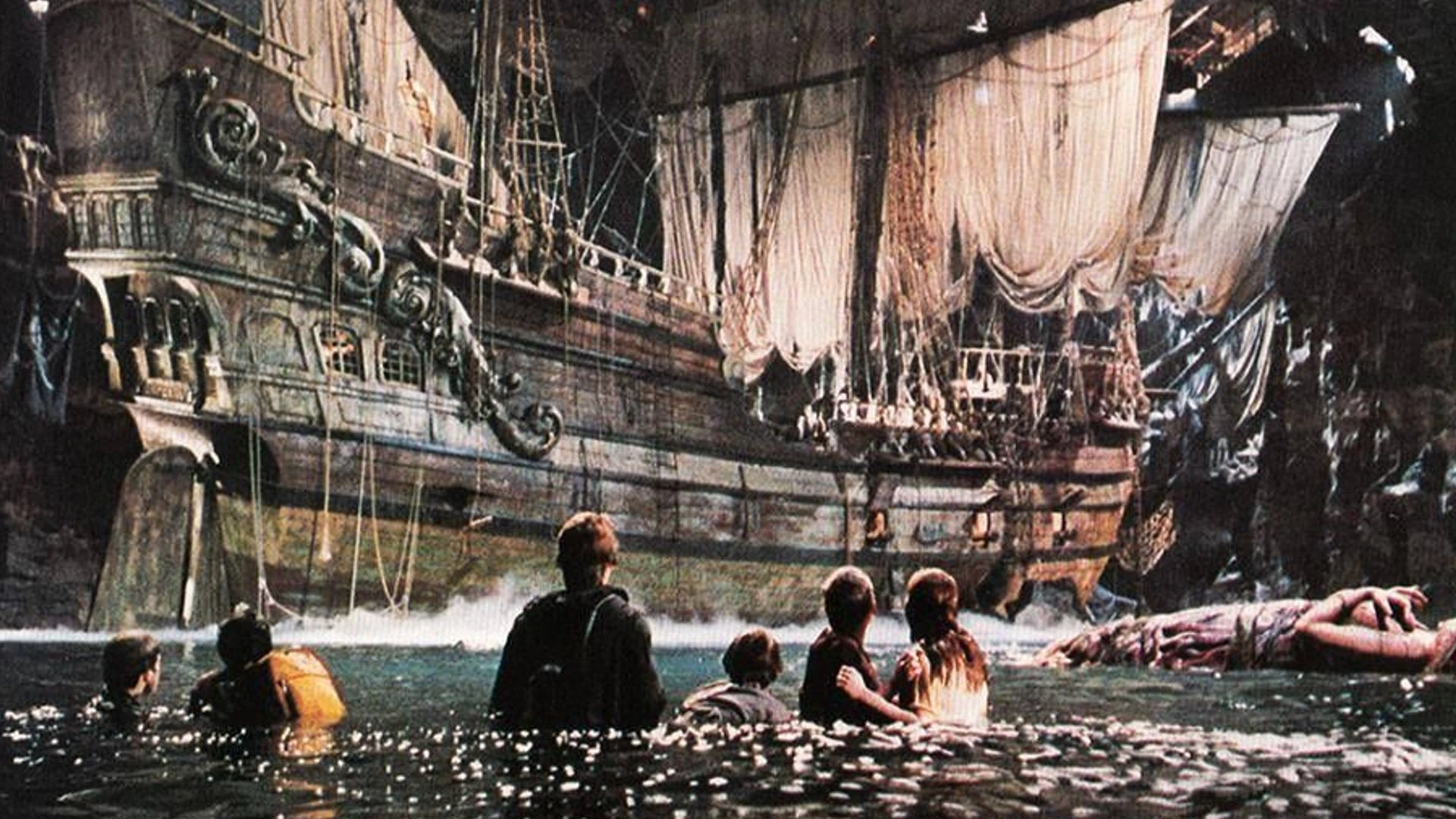
The discovery of the galleon makes what the map promised become real. In Monkey Island a ship can be a prize, a means of departure, or an enemy's territory. The film makes us look at the landing; the game invites us to explore it.
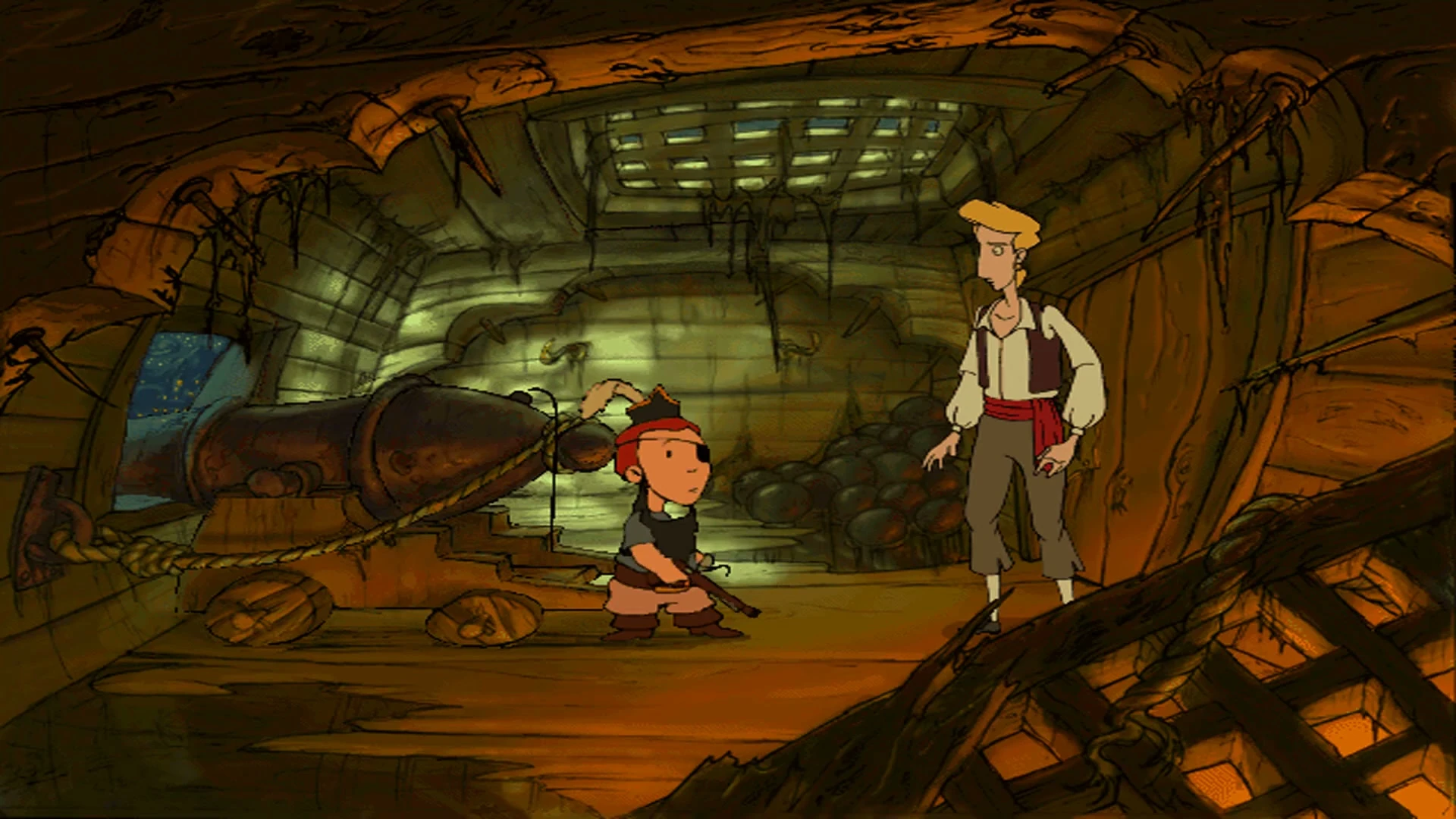
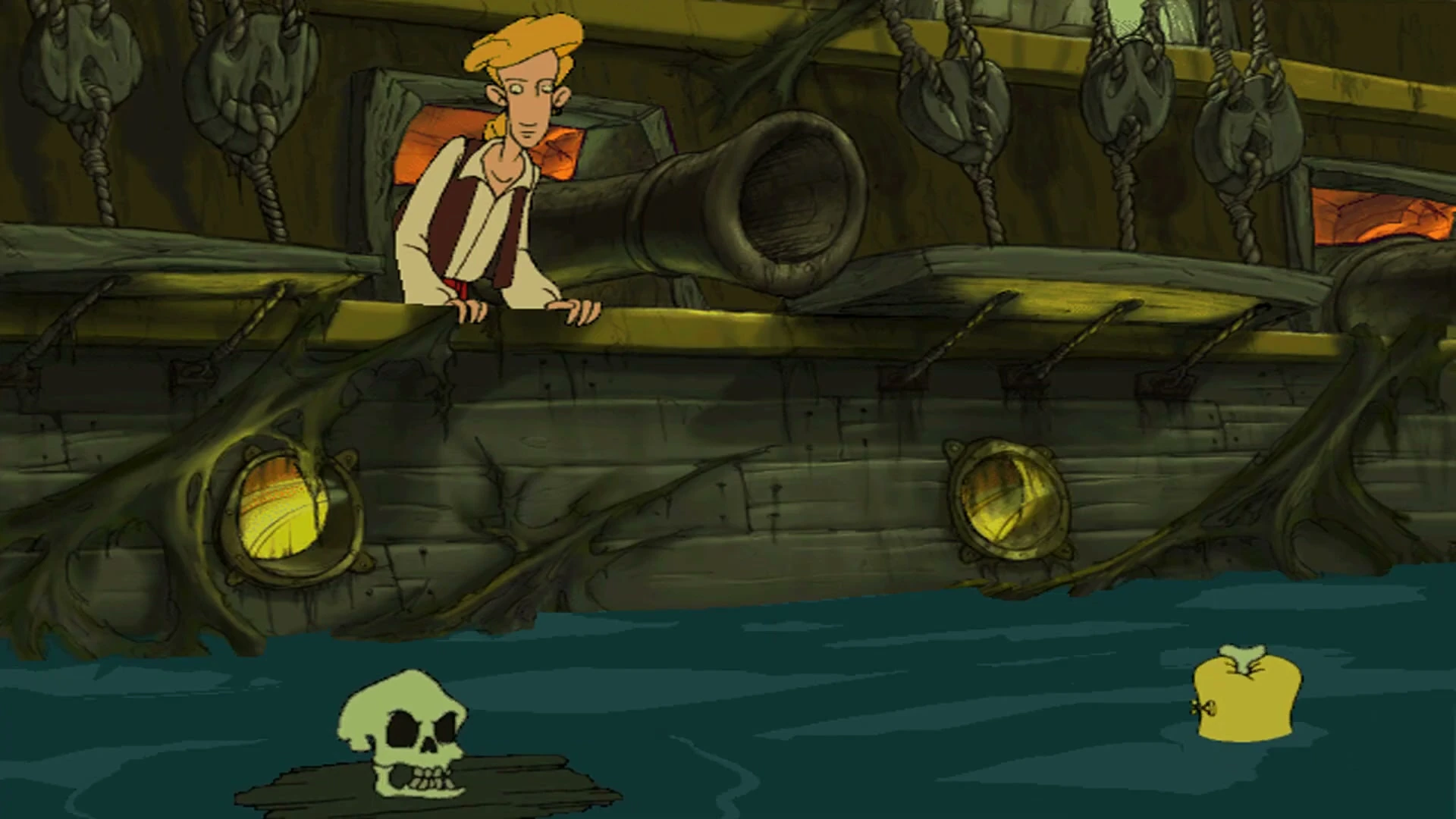
A truly constructed marvel
The story of the ILM technicians distinguishes the scale model of the Inferno from the large set with galleon and cave set up on Stage 16. The fantastic adventure also passes through the work on wood, sails, lights and water: details that are worth observing when the ship appears.
Behind the scenes: ILM · testimonials for the fortieth anniversary.
The taste of discovery, on the faces
The map changes hands, someone points in a direction, the others huddle together to look. These images bring the comparison back to the characters: the wonder and the jokes work because the adventure is experienced together. The meeting with Sloth also adds a face and an ally that the group was not expecting.
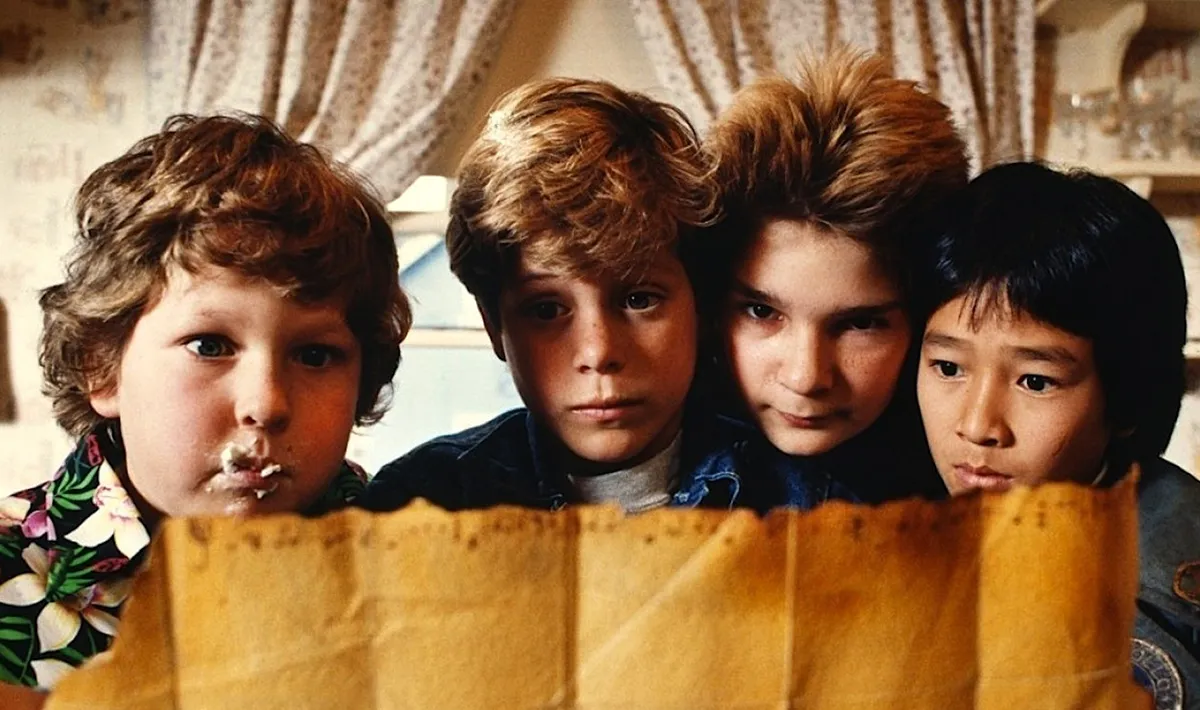
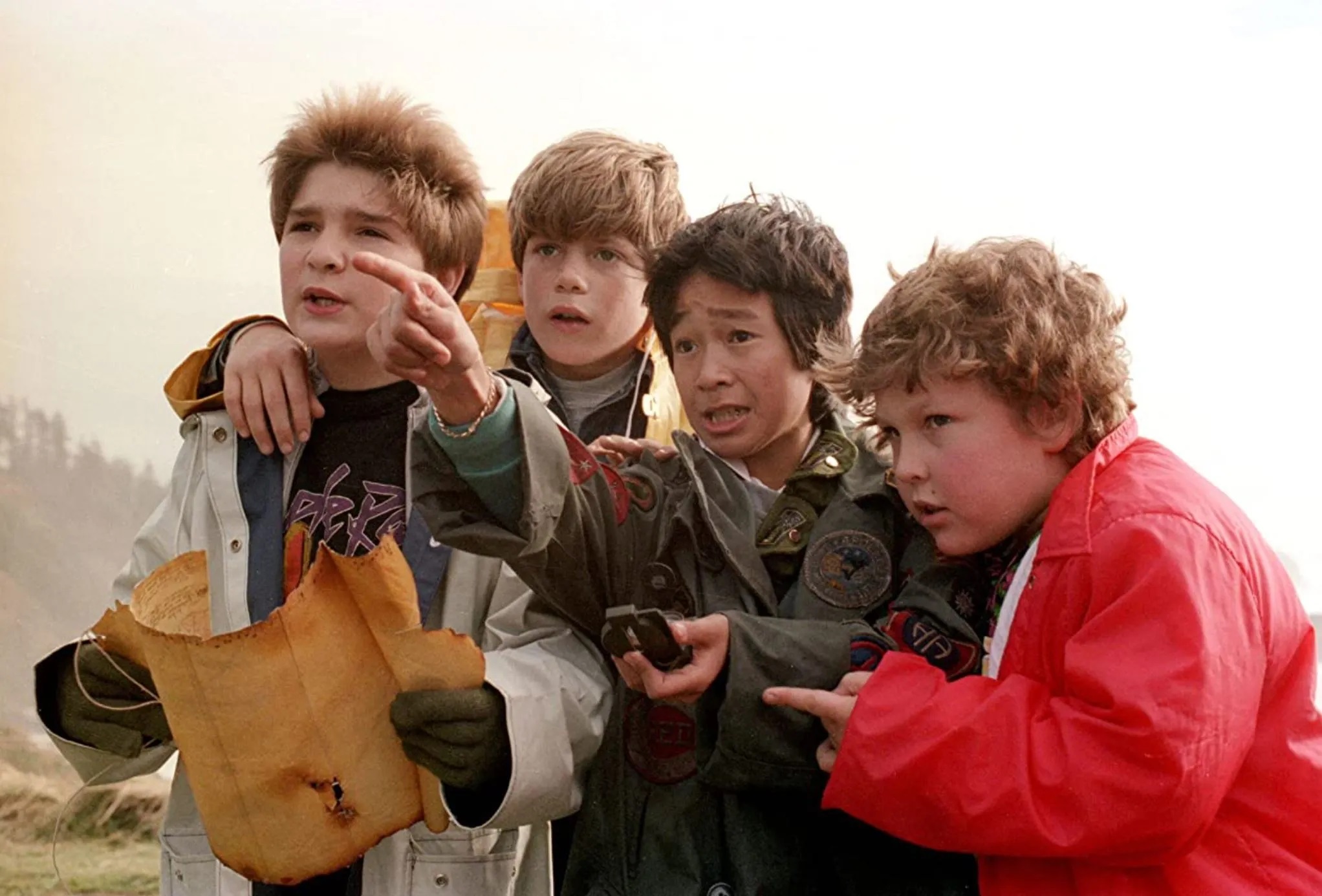
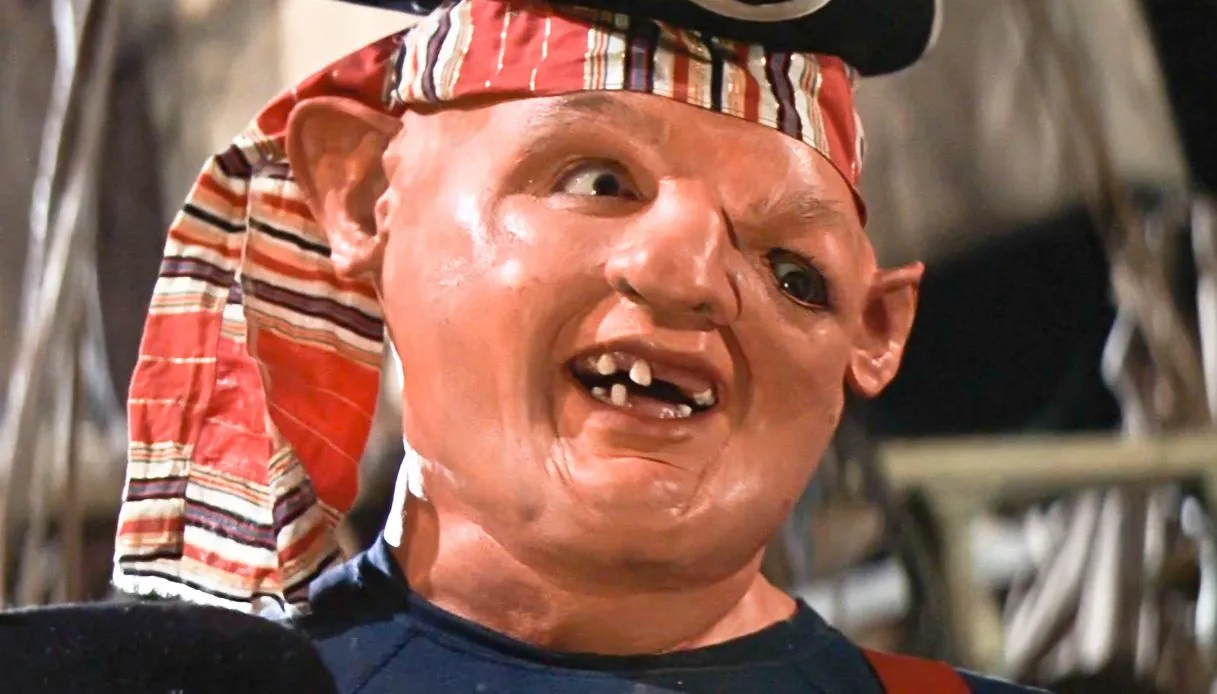
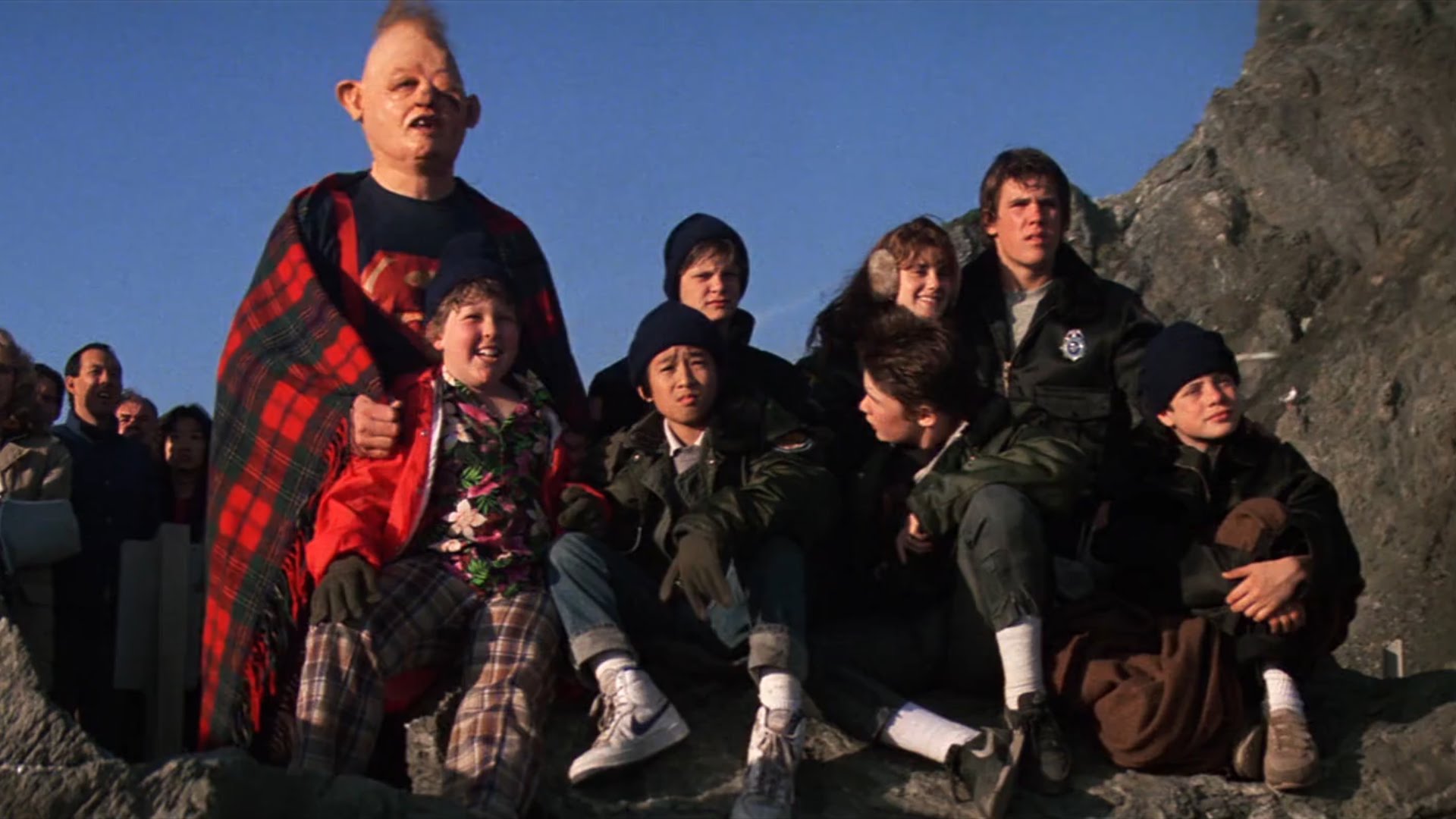
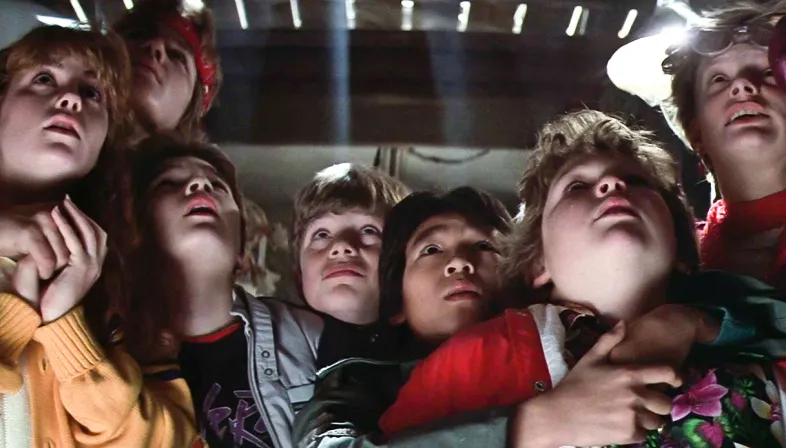
Film images provided by the webmaster · © Warner Bros. and respective owners.
Productions Monkey Island Site
Follow the map
Coming soon
A map to follow, a treasure to seek and two worlds ready to meet. Our new film dedicated to the Goonies and Monkey Island is arriving: a journey through adventure, puzzles and humor.
The webmaster's SteelBook
A map also inside the case: the SteelBook preserves the adventure between the illustrated front, the galleon on the back and the cartography of the interior. These four photographs from the webmaster's collection show the actual object, with edges and print details preserved.
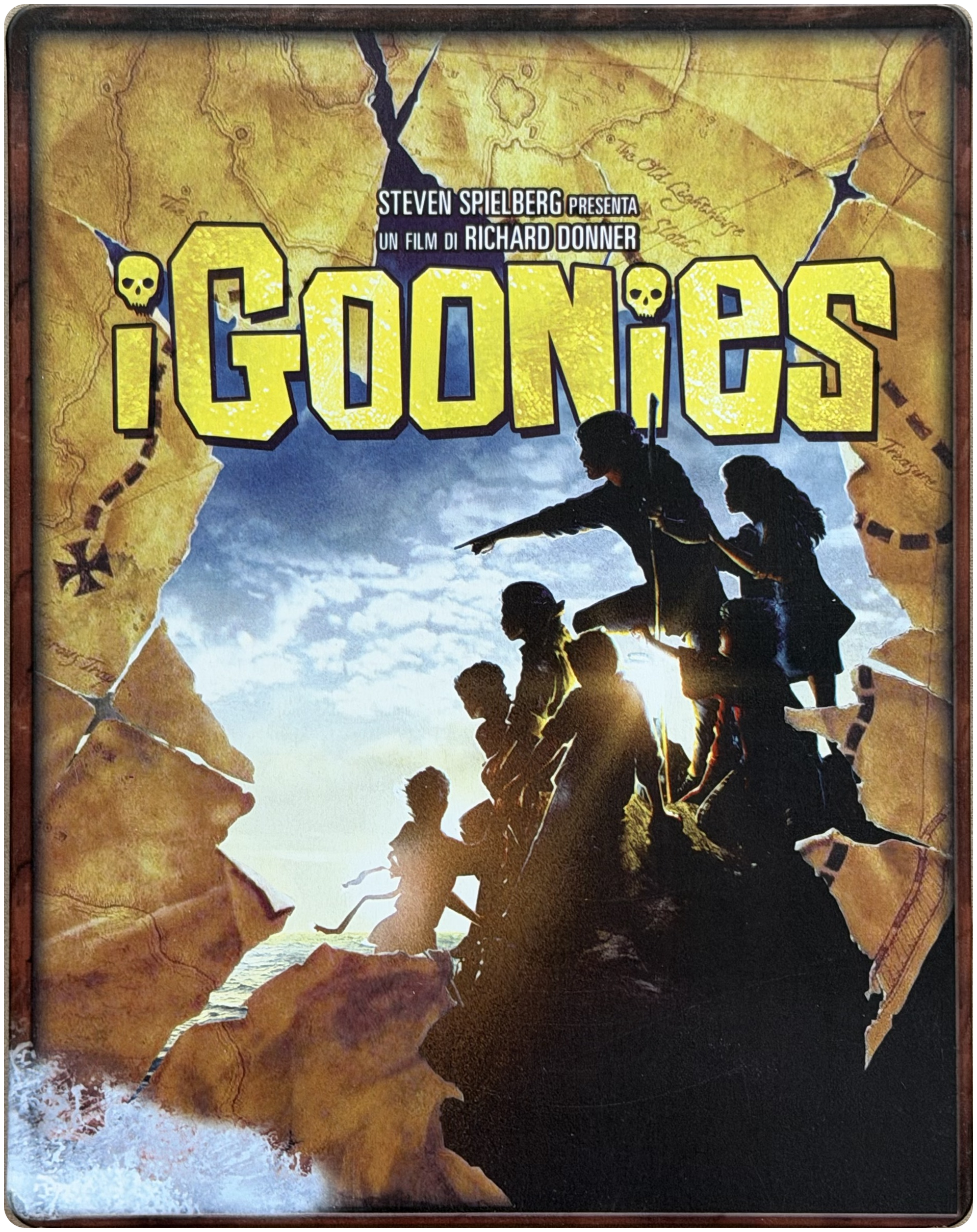
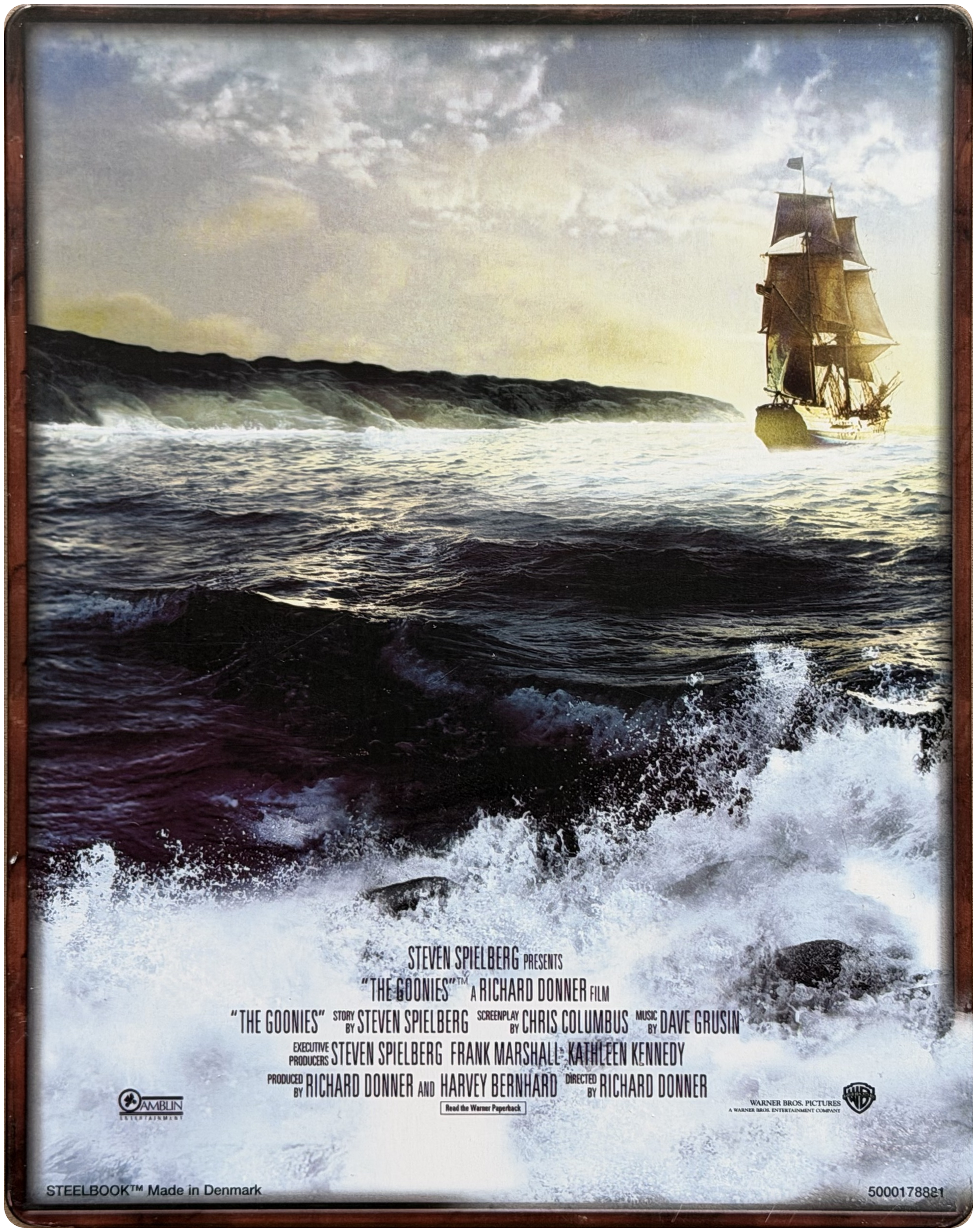
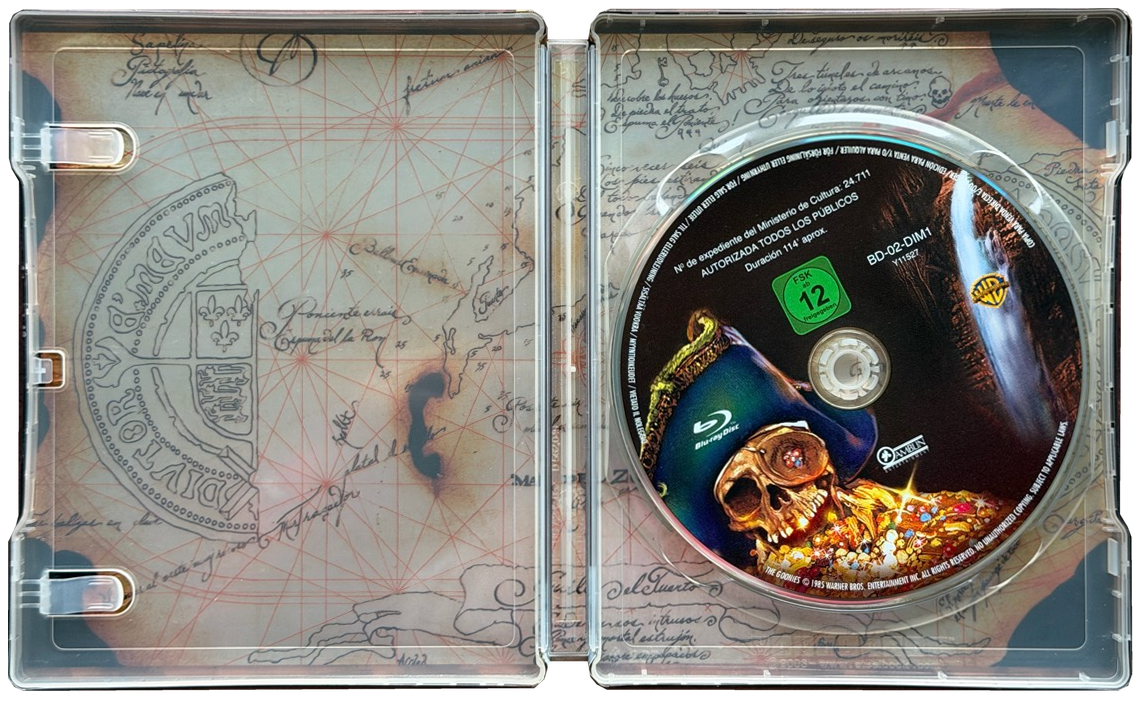
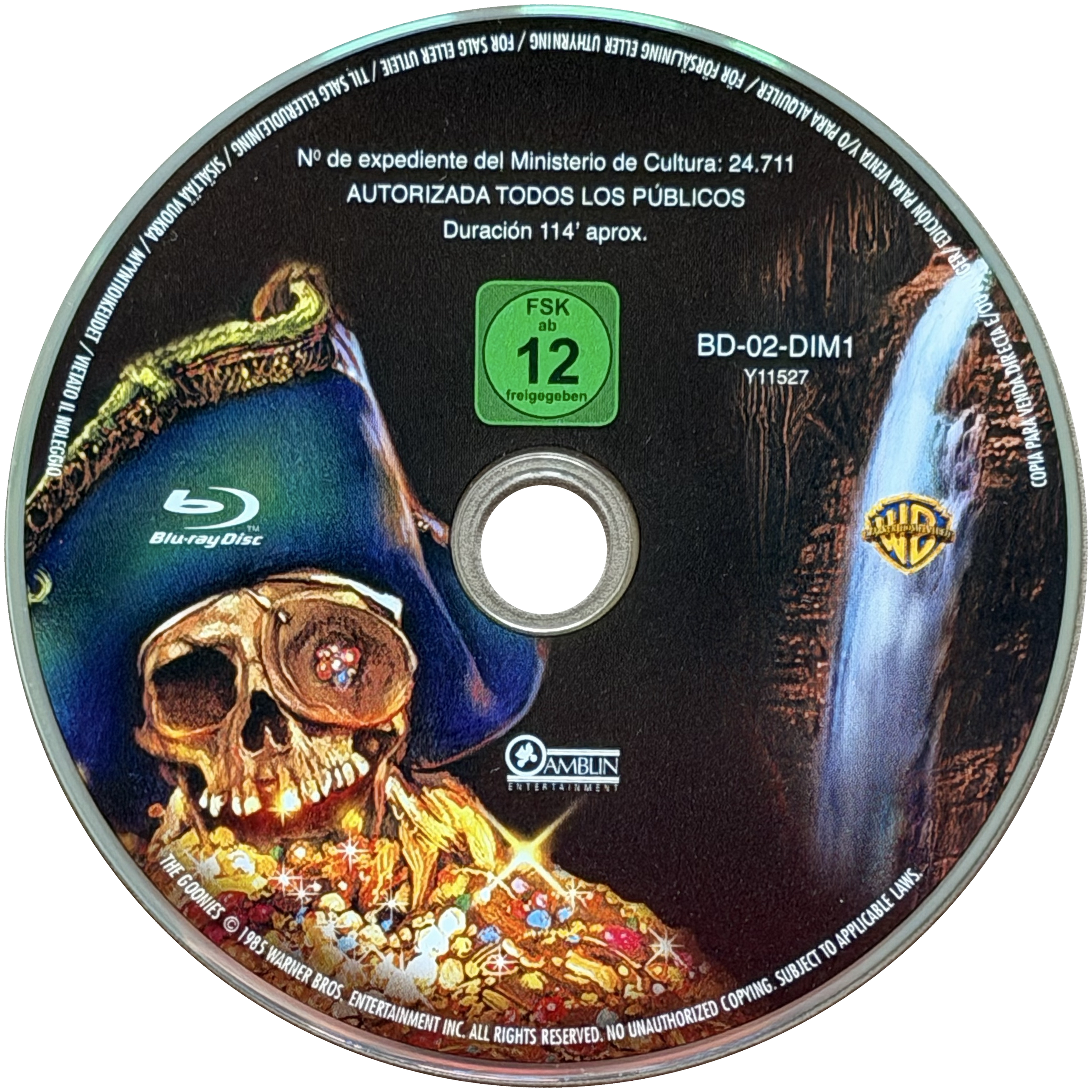
Photographs straightened and corrected in perspective. The background has been cut out and the disc hole is transparent; reflections and signs of the object remain those photographed.
The preserved paper cover and scan of the disc
The paper cover is a separate document from the photographed SteelBook. The detached fragment has been replaced in the restored copy and the creases have been smoothed out. The original scans remain preserved. For the main gallery we chose photographs of the object; the scans remain available for consultation here.
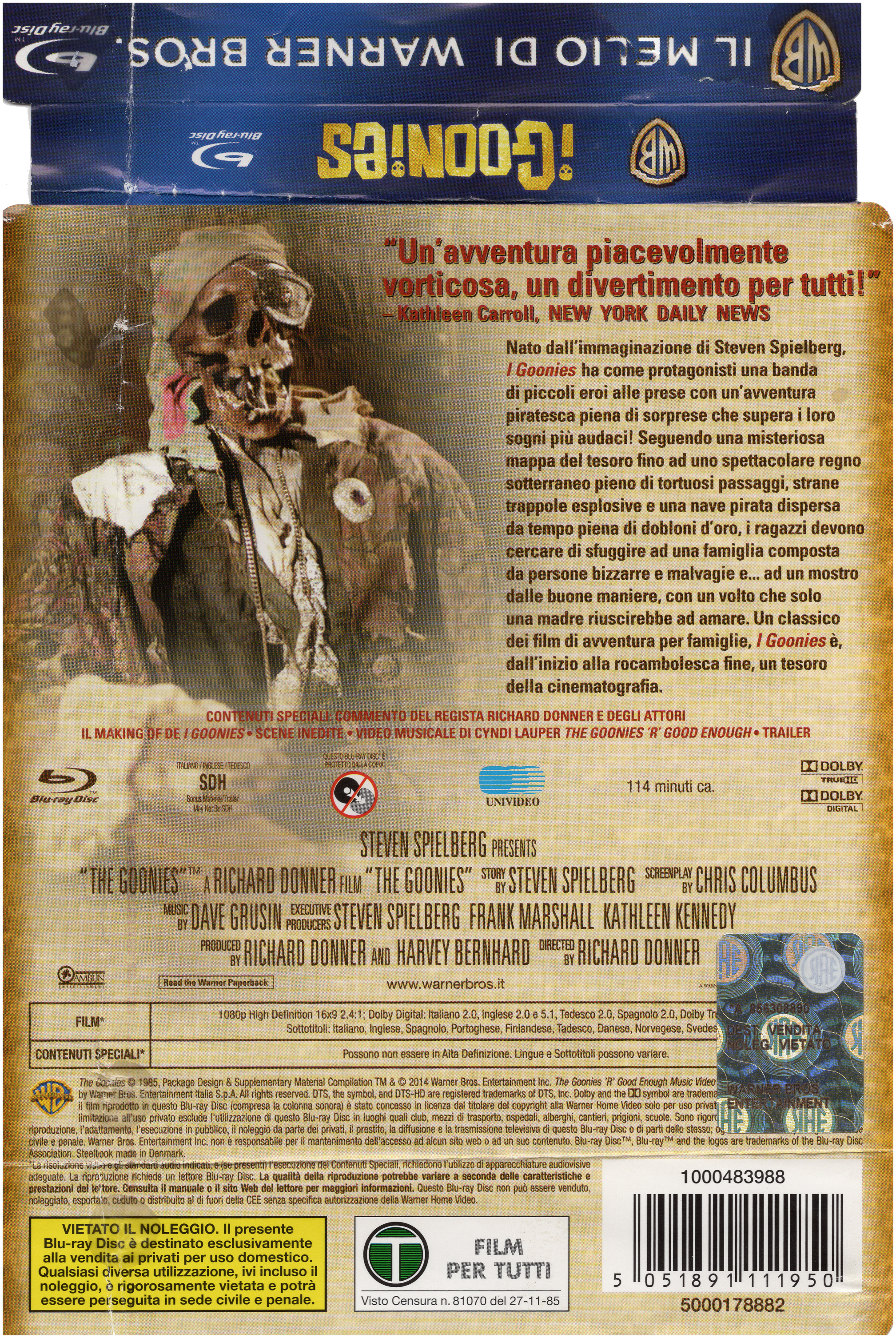
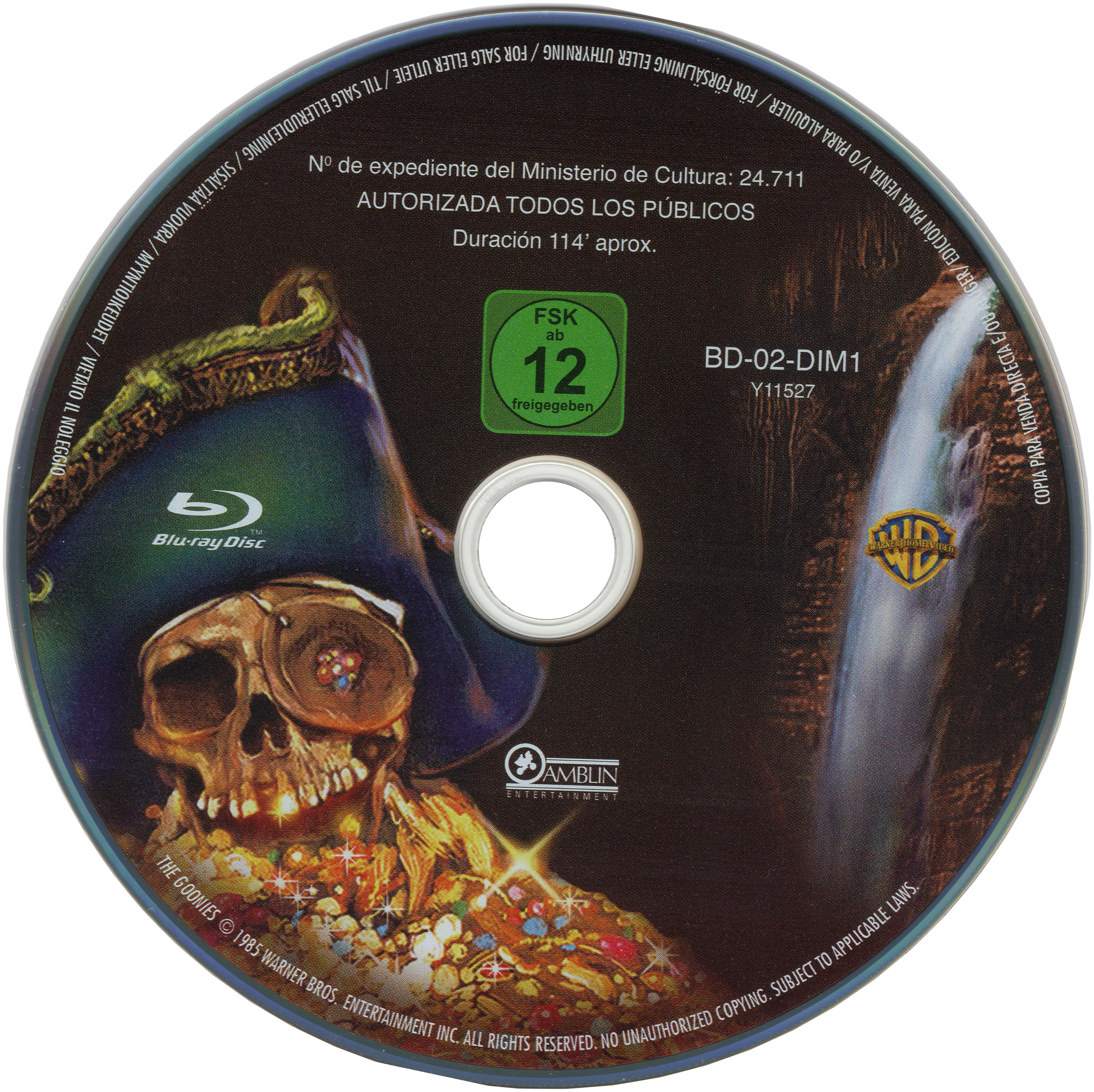
When adventure becomes an object
The skull key becomes a bottle opener or an object to display, the world of pirates enters a mug and the objects from the film are printed on a t-shirt. They are small ways to bring the memory of the adventure off the screen.
The reference to Monkey Island also comes from here: the pleasure of recognizing an object, preserving it and telling the story that brings it to mind. The t-shirt with accessories even resembles an inventory screen, where everything promises a use and a possible joke.
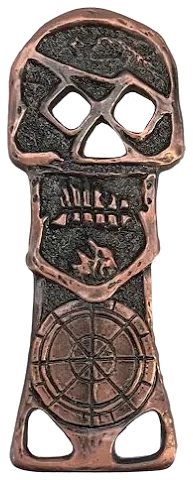
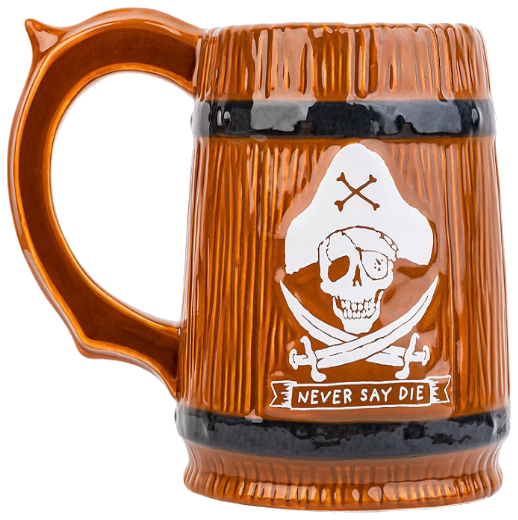
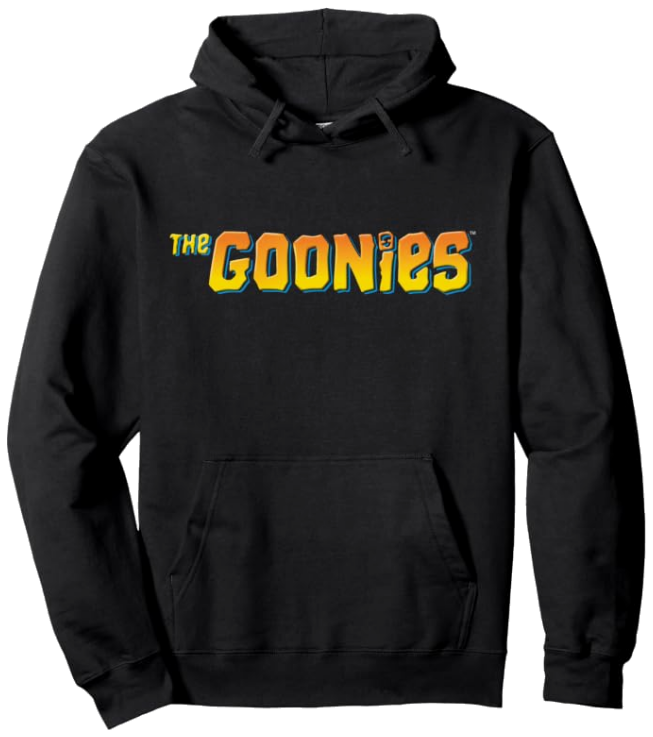
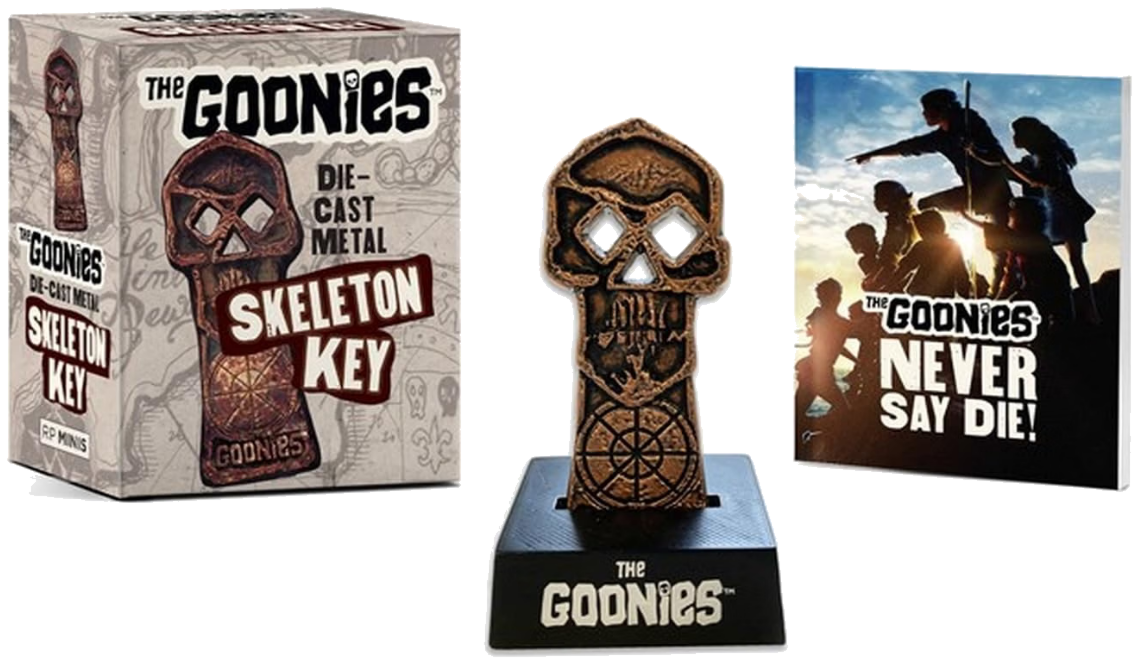
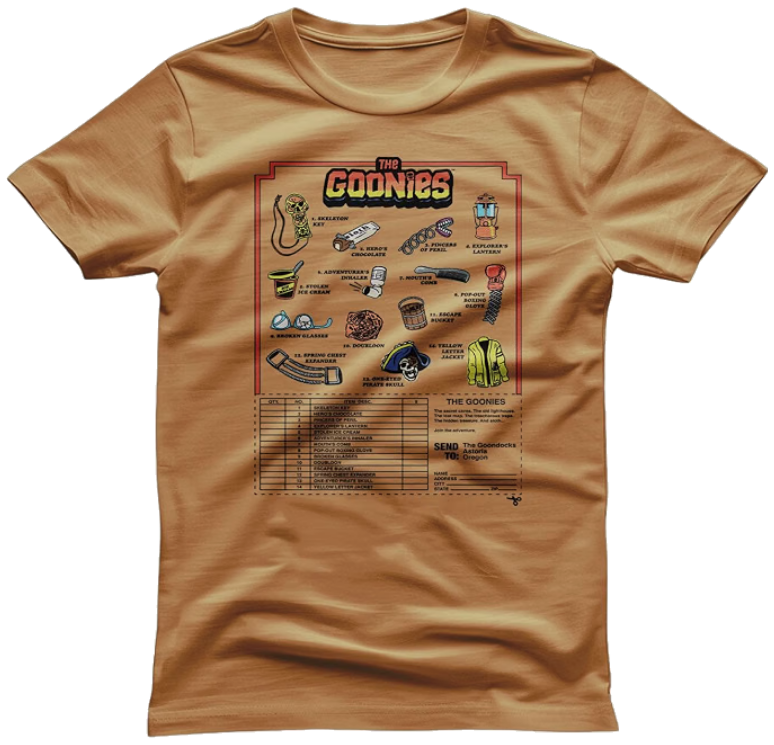
Examples of merchandising illustrated by the images provided by the webmaster; they are distinct from the objects in his photographed collection. Trademarks and graphics belong to their respective owners.
Sources, images and credits
Comparisons with Monkey Island are an editorial proposal of the site. Information about the film is verified on the Amblin card; the passage on the construction of the ship refers to testimonials published by ILM.
- Image of the kids with the map: Amblin, promotional material for the film.
- Bone organ: still from the film found on CinemaBlend.
- Inferno: still from the film found on GeekTyrant.
- Game images: MIS local archive; longplay stills and original backdrop by Return. LucasArts / Terrible Toybox and respective owners.
- SteelBook and disk: photographs of the webmaster, cropped and corrected in perspective. Paperback cover and disc scan preserved in separate gallery.
Frames, game graphics and materials from the collection belong to their respective owners and accompany the editorial commentary.