 EN ROUTE TO THE CARIBBEAN · SINCE 1999
Museum
Banners, encounters and pages becoming memories
Following a small banner could lead to another fan, a story or a walkthrough. The Museum preserves that way of browsing too: a site as a harbour, links as routes and pages as traces of those who passed through.
02
The crew left a trace
Guestbooks, chats, forums and email could turn reading into an encounter. Visitors sent corrections, images and accounts of their adventures. The present site continues this through the guestbook, contributed materials and crew screenings, without inventing participants or messages not documented by the archive.
03
Three dates to read carefully
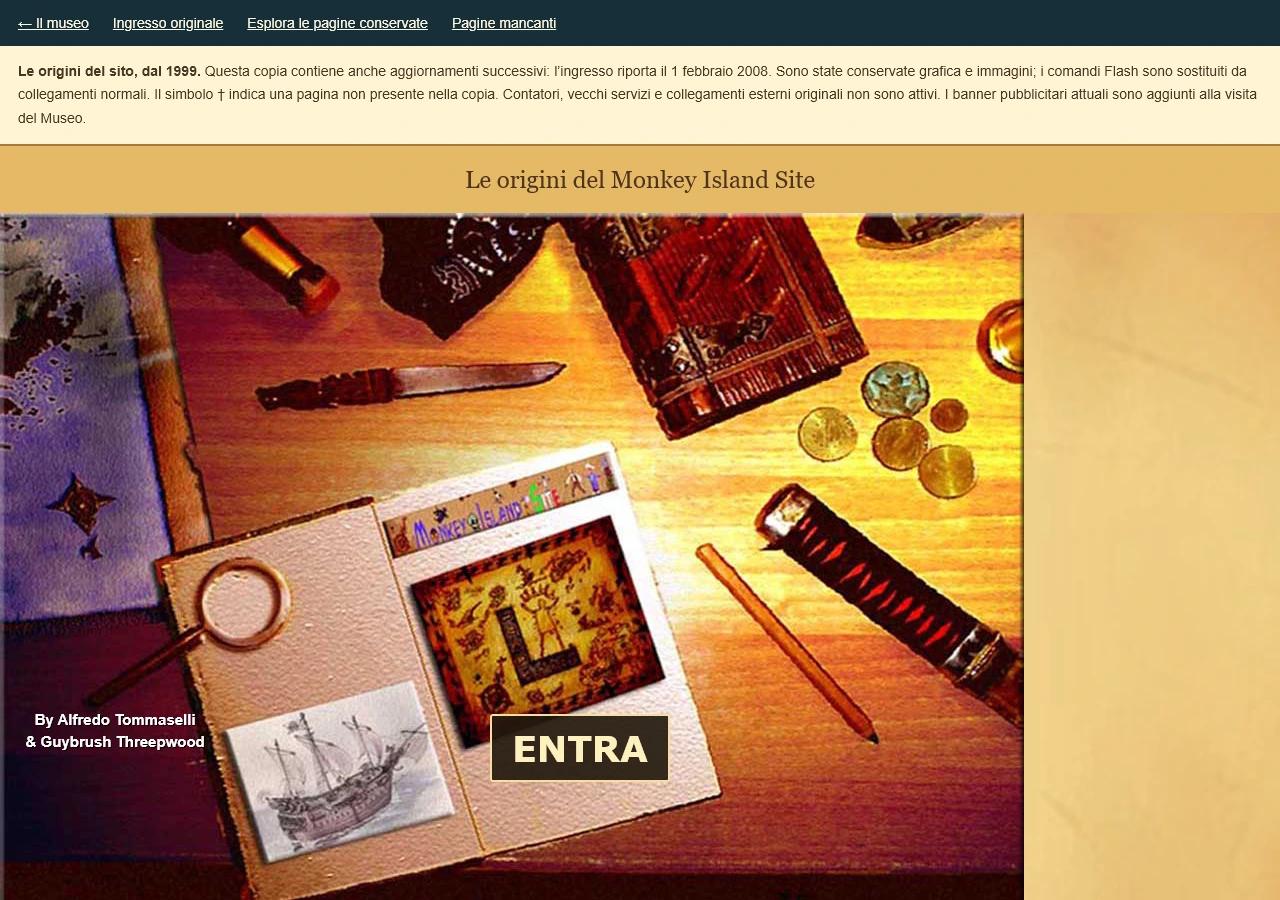
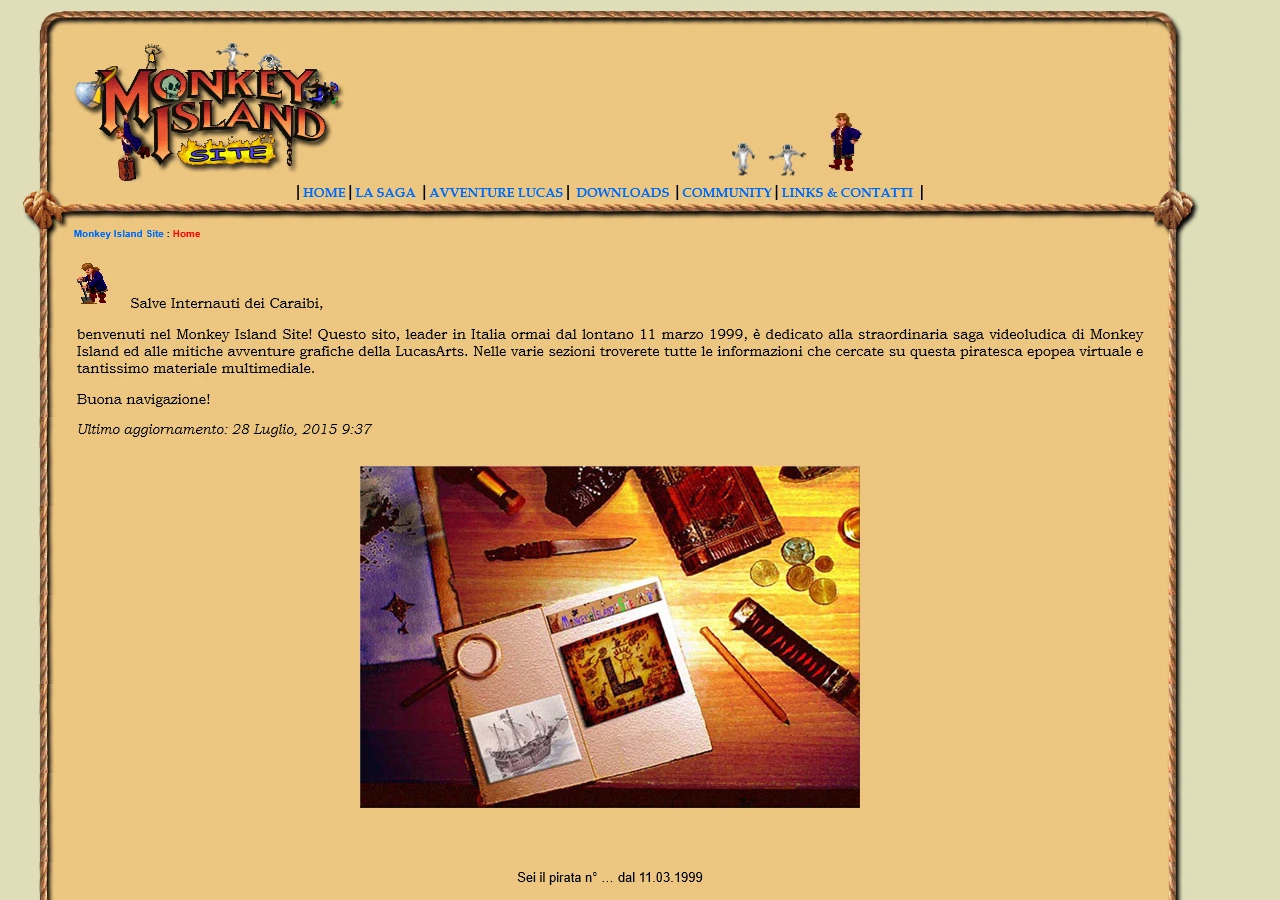
11 March 1999 marks the site’s birth. The entrance preserved in the origins Museum instead displays 1 February 2008: that design includes later updates, not a frozen image of founding day. The 2015 edition states an update of 28 July. Founding, page date and preserved-copy date must remain distinct.
04
An entrance can outlive its software
The original entrance used Flash components. Today’s restoration retains graphics and images while supplying ordinary links for visiting without that software. Missing pages are identified rather than reconstructed as recovered originals. These screenshots show the archives as rendered today, not recordings of a browser in 1999.
05
The past remains a route
Preservation keeps differences and gaps readable. An old service may stop responding, while a banner still recalls a connection. Archives and current resources serve distinct purposes: we can visit yesterday’s harbour and return to today’s living site without erasing its journey.